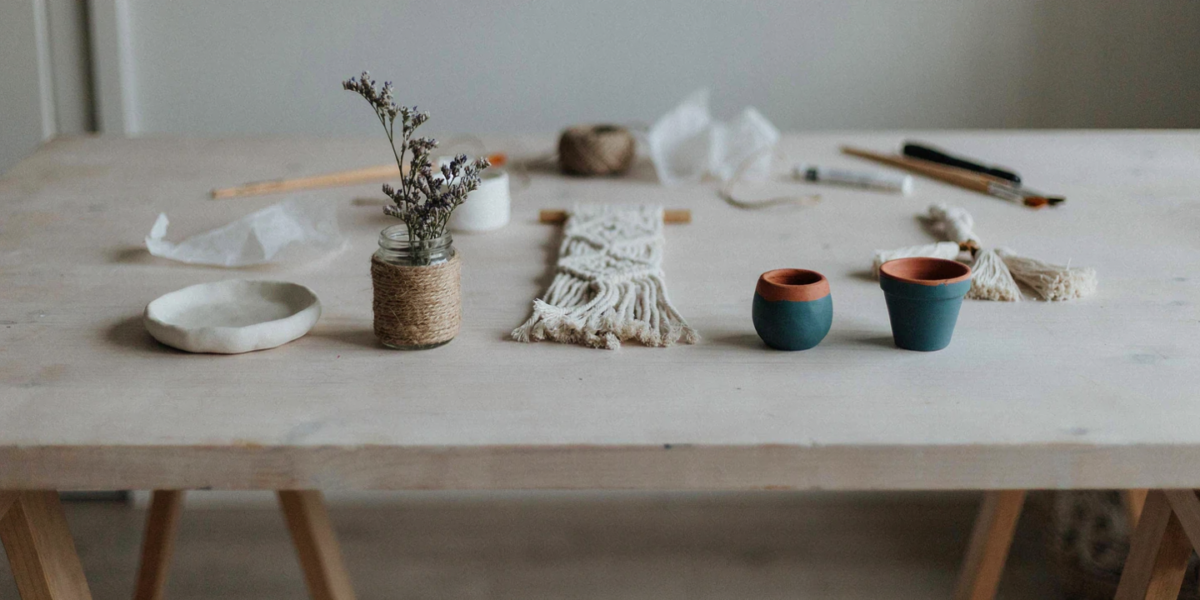
10 Easy DIY Crafts You Can Finish in One Evening
“Easy” is the most overused word in crafting. A project is only easy if you can finish it in one sitting, with tools you already have, without a step that needs practice you haven’t had yet.
That’s the test every project below passes. Each has a realistic time, the tools it needs, and the one step where beginners usually go wrong, so you can see it coming.
Easy DIY Crafts That Need No Special Tools
Almost everything here uses the same short kit: scissors, a ruler, a pencil, white craft glue or a low-temperature glue gun, a couple of paintbrushes, and a cutting mat or an old board to work on. Where a project needs one more thing, it says so.
The times include setting up and tidying away, because a project that takes 30 minutes plus 20 minutes of cleanup is a 50-minute project.
1. Air-dry clay trinket dish (40 minutes, plus drying)
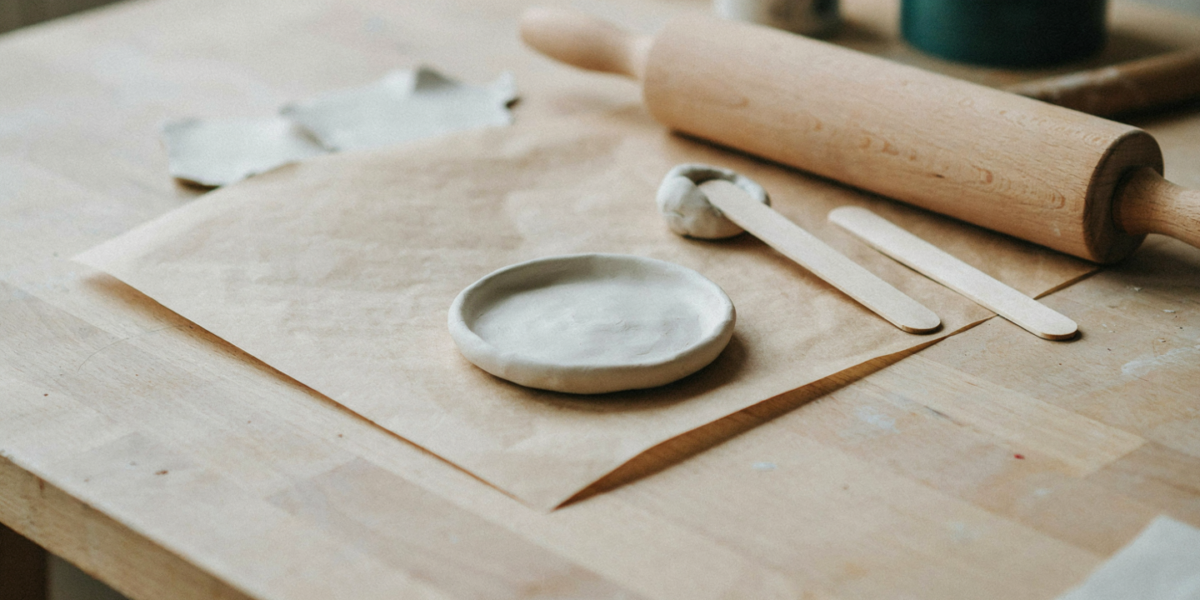
Roll a ball of air-dry clay to about a quarter inch thick, cut a circle around a small bowl, and press it gently into the bowl to shape it. Smooth the edge with a damp finger, leave it to dry for a day or two, then sand and paint or seal it.
Where it goes wrong: uneven thickness. Thin patches dry first and crack. A rolling guide helps: two identical wooden paint stirrers on either side of the clay. More ideas in our air dry clay crafts.
2. Twine-wrapped jar vase (30 minutes)
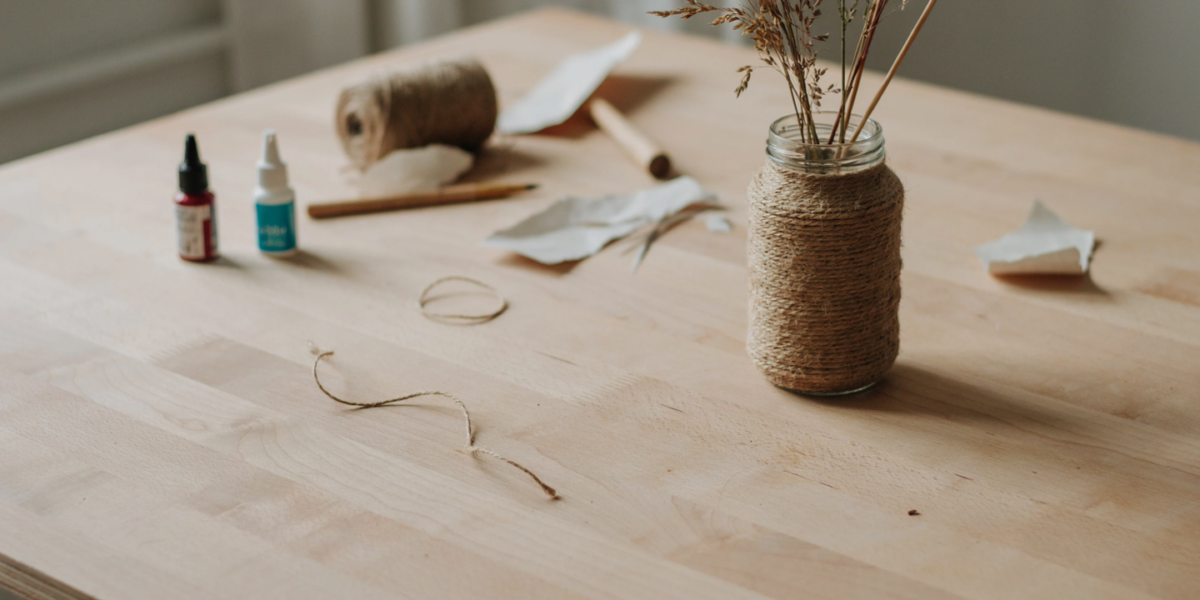
Clean a glass jar, run a line of glue around the base, and start wrapping natural jute twine tightly upward, adding glue every few rounds. Stop just below the neck, or wrap all the way to the rim.
Where it goes wrong: gaps between rows. Push each row down against the one below as you go, and the finished jar looks tight instead of homemade.
3. Pressed-leaf frame (45 minutes, plus a week of pressing)
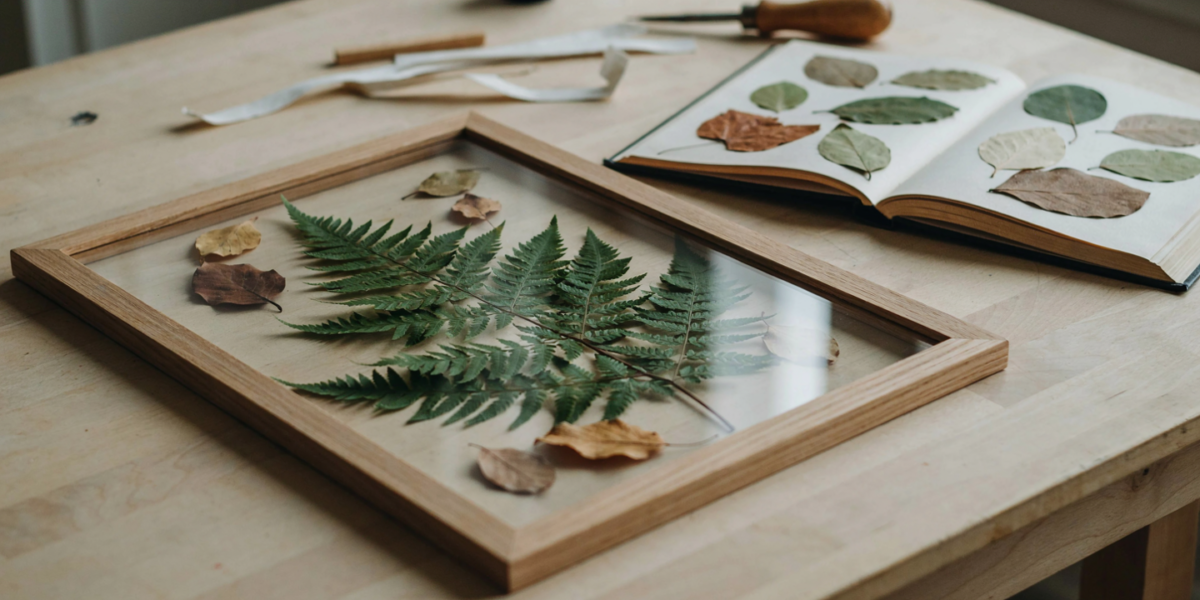
Press leaves or flowers between sheets of paper inside a heavy book for about a week. Then lay them between the two panes of a floating glass frame, which holds them in place without glue.
Where it goes wrong: pressing thick or juicy plants. Flat leaves, ferns and thin petals press well; succulents and thick flower heads go moldy.
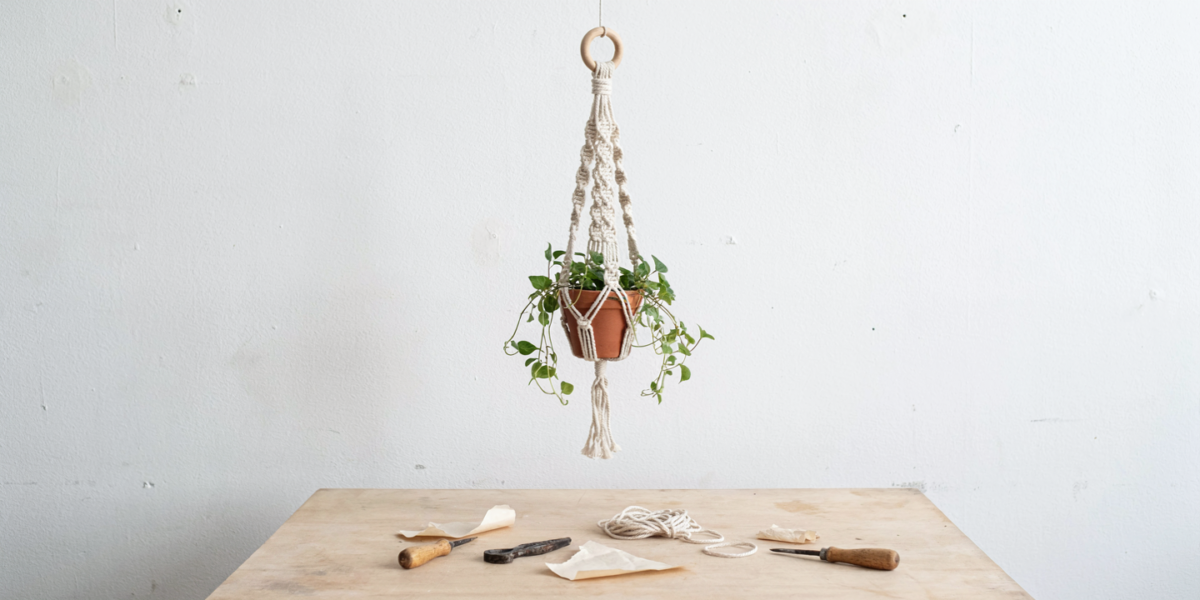
4. Macramé plant hanger (1 hour)
The whole hanger uses one knot, the square knot, plus a gathering knot at the top and bottom. Cut eight lengths of 4 mm cotton cord about 12 feet each, fold them through a wooden ring, and tie rows of square knots down each group of four strands.
Where it goes wrong: cord that’s too short. Knotting uses much more length than it looks like it will. Cut long and trim the tails.
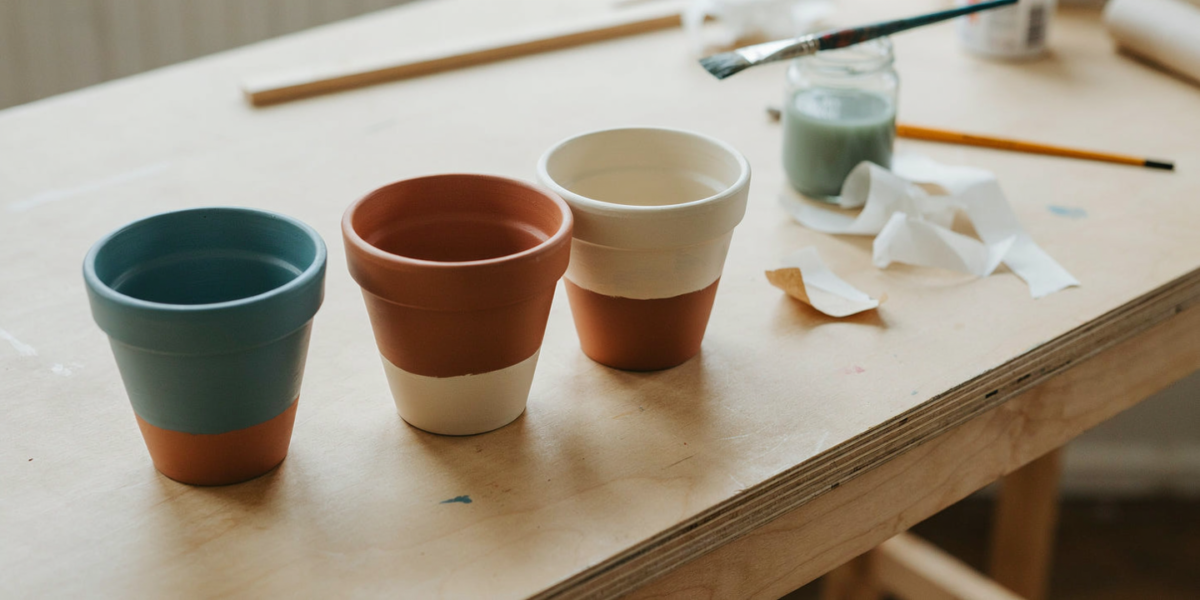
5. Painted terracotta pots (45 minutes, plus drying)
Wipe the pots clean, give them a coat of acrylic paint, and let them dry. Painter’s tape makes clean stripes and color-blocked bases. Seal the outside with a clear acrylic sealer if they’ll live outdoors.
Where it goes wrong: painting the inside. Terracotta needs to breathe for the plant’s sake; paint the outside and the rim only.
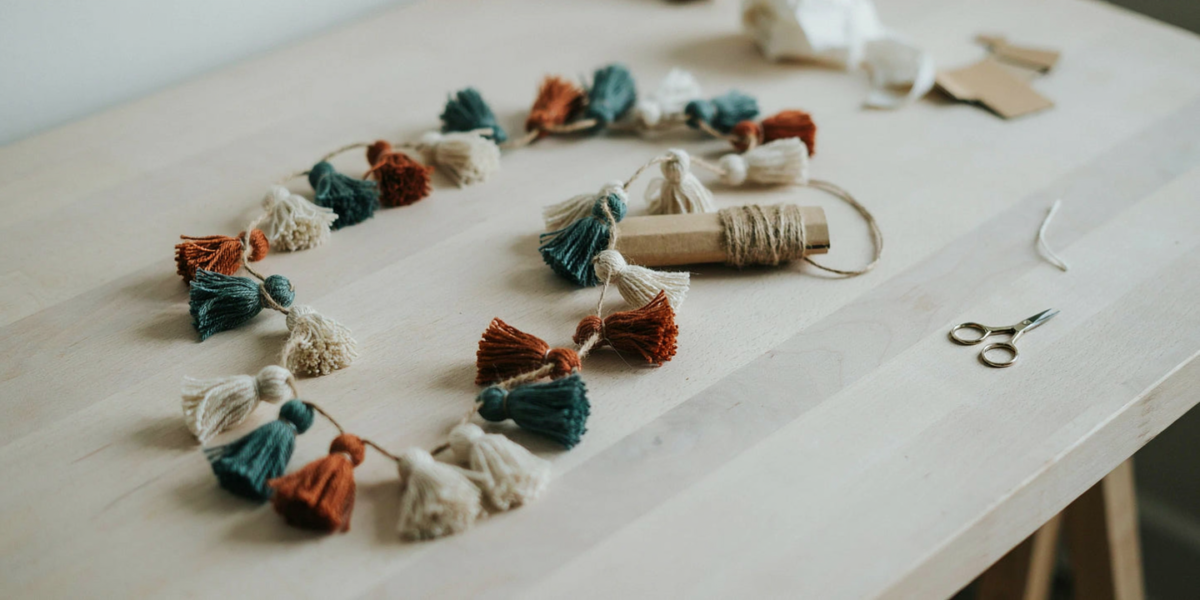
6. Tassel garland (1 hour)
Wrap embroidery floss or yarn around a piece of cardboard about 25 times, tie the loop at the top, cut the bottom, and wrap a second piece of floss around the neck. Make twelve to fifteen tassels and thread them onto a length of twine.
Where it goes wrong: uneven tassels. Use the same piece of cardboard and the same number of wraps for every one.
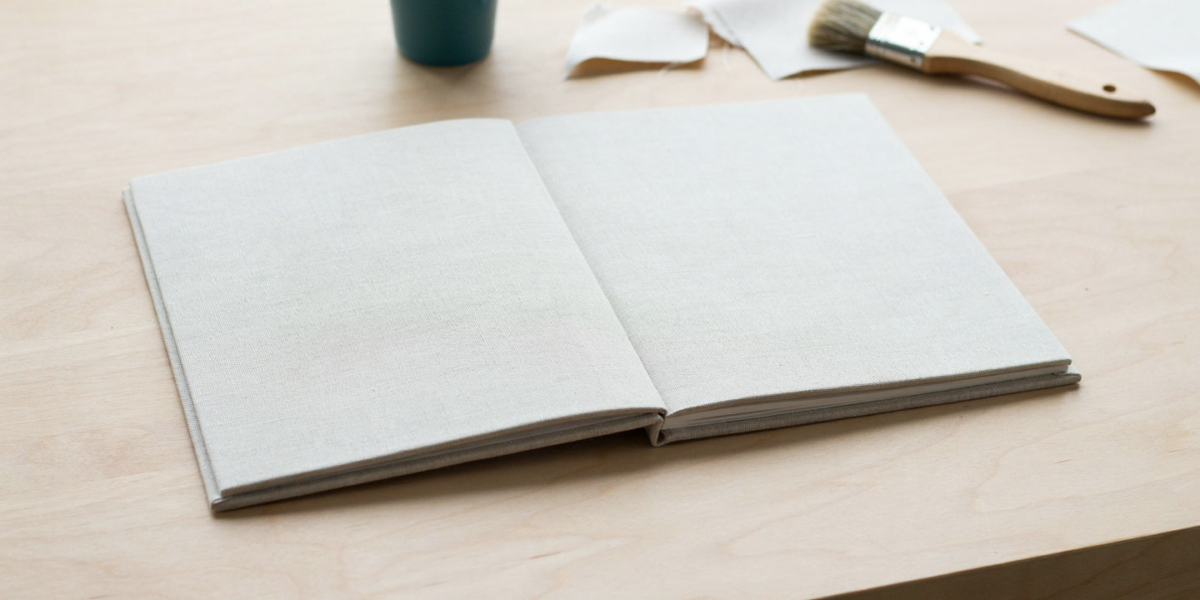
7. No-sew fabric-covered notebook (40 minutes)
Cut a piece of cotton fabric about an inch larger than the open notebook on every side. Brush a thin layer of craft glue over the cover, lay the fabric on, smooth it from the spine outward, and fold the edges over inside the covers. Glue a sheet of paper over the inside covers to hide the edges.
Where it goes wrong: too much glue, which soaks through and stains the fabric. Thin is enough.
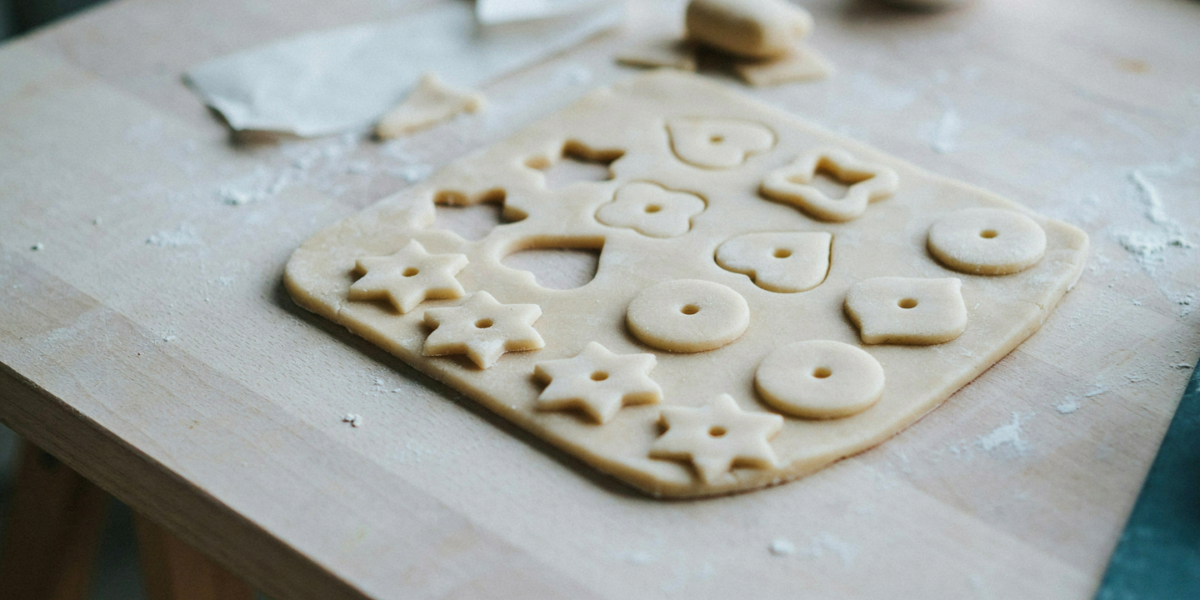
8. Salt dough ornaments (1 hour, plus baking)
Mix one cup of flour, half a cup of salt and about half a cup of water into a dough. Roll it a quarter inch thick, cut shapes, poke a hole for hanging with a straw, and bake at about 250°F for two to three hours until completely dry and hard, turning them halfway.
Where it goes wrong: too high an oven. Hot ovens puff and brown the dough. Low and slow keeps it flat and pale.
9. Stamped tea towels (45 minutes)
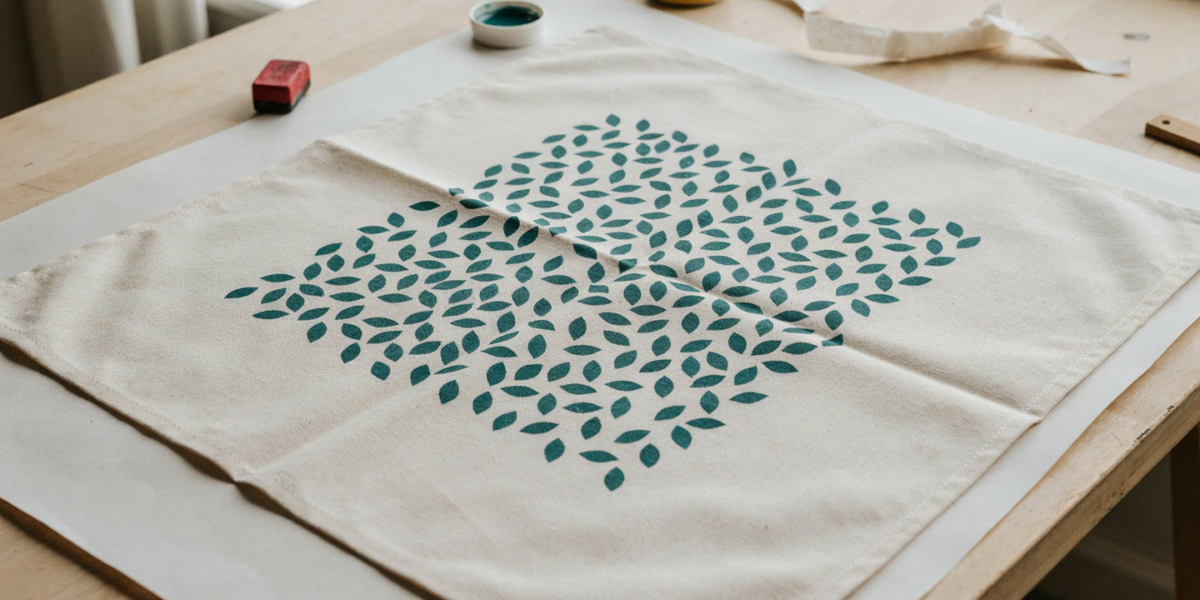
Carve a simple shape into a rubber eraser or half a potato, brush fabric paint onto it, and stamp it in rows across a plain cotton tea towel. Heat-set the paint with an iron once dry, following the paint’s instructions.
Where it goes wrong: too much paint on the stamp, which blurs the edges. Dab off the excess on scrap paper first.
10. A candle in a thrifted jar (1 hour, plus curing)
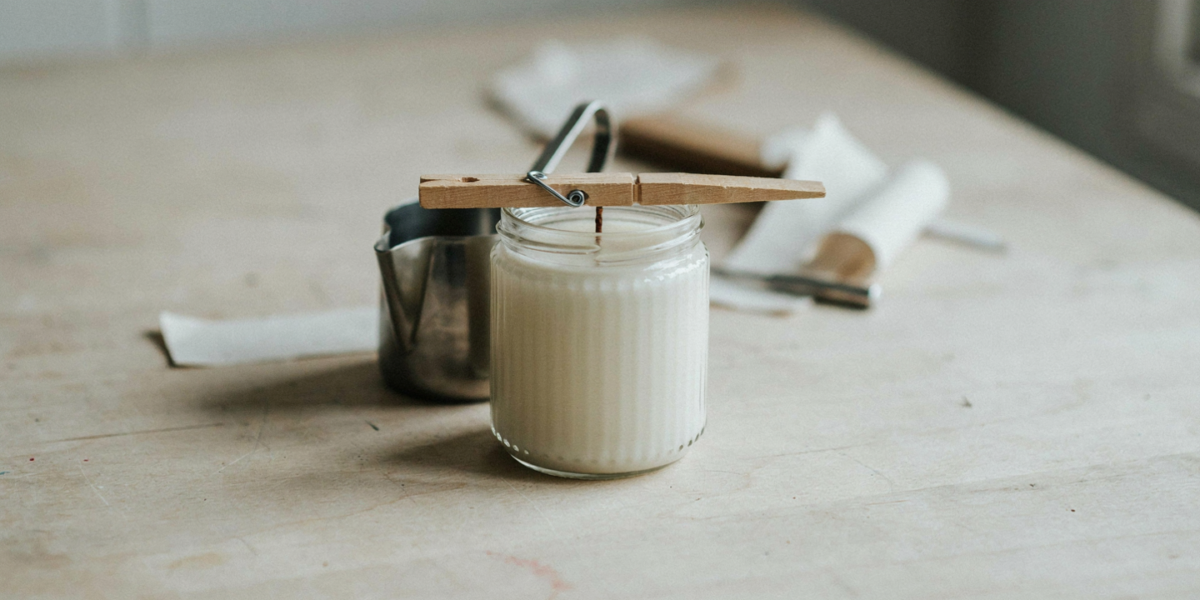
Melt soy container wax in a pouring pitcher set in a pan of simmering water, add fragrance at the temperature the wax supplier recommends, and pour it into a jar with a wick held straight by a clothespin. Let it set overnight.
Where it goes wrong: the wrong wick size, which leads to tunneling. That’s why candles get their own article: DIY candles.
What We Would Skip
Kits that promise a finished piece in fifteen minutes. The time is real only because the hard part was done at the factory, and you learn nothing you can use on the next project.
Buying a full set of tools before the first project. Start with scissors, glue, a brush and a ruler, and buy the next tool when a project needs it.
Anything with resin as a first project. Resin needs ventilation, gloves, careful measuring and patience with curing, and it’s the most common reason first-time crafters give up.
Where We Would Start
The twine-wrapped jar (2) tonight, because it’s thirty minutes and nearly impossible to get wrong. Then the air-dry clay dish (1) at the weekend, which introduces drying time and sanding.
Once those feel easy, the DIY fall wreath is a good next step, and several of these make good DIY Christmas gifts.
Questions We Get Asked
What are the easiest DIY crafts for beginners?
Twine-wrapped jars, painted terracotta pots, tassel garlands and air-dry clay dishes. All four need only basic supplies, take under an hour of active work, and forgive small mistakes.
What supplies do I need to start crafting?
Scissors, a ruler, a pencil, white craft glue or a low-temperature glue gun, a few paintbrushes, acrylic paint and a cutting mat or old board. Most beginner projects need nothing more.
What crafts can I make in one evening?
Every project in this list takes about an hour or less of active work, although clay, paint and salt dough need extra time to dry or bake afterwards.
What easy crafts can I sell?
Macramé plant hangers, painted pots, candles and stamped tea towels are common choices, because they’re useful as well as decorative. Check any local rules about selling handmade goods, especially candles.
Are these crafts safe to do with kids?
Most are, with an adult handling the glue gun, the oven and the hot wax. Salt dough, tassels, painted pots and pressed-leaf frames are the most kid-friendly.
How do I get better at crafting?
Repeat a project instead of always starting new ones. The second macramé hanger is noticeably better than the first, and that’s the fastest way to learn.