Crafts to Sell: What to Make, How to Price It and How to Set Up a Table
Selling crafts at a holiday market looks simple: make things, set up a table, sell them. The part most first-time sellers skip is the arithmetic. A candle that costs $4 in materials and sells for $12 seems like a good margin until you count the hour it took, the table fee and the jars that cracked.
This guide covers what to make, how to price it so you don’t lose money, and how to set up a table that sells. It’s general information, not legal or tax advice; selling rules differ by state and city.
Crafts to Sell Should Be Repeatable, Light and Easy to Explain
A good craft to sell has three qualities. You can make ten of them in an afternoon. They’re small enough to carry home from a market. And a buyer understands what it is in two seconds. Gifts priced between about $10 and $30 tend to be the easiest decision for holiday shoppers.
1. Candles
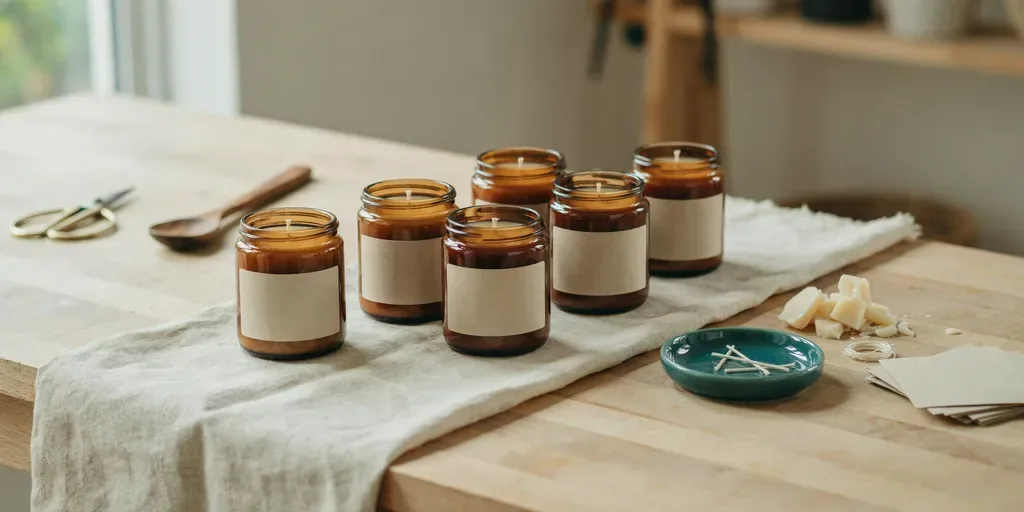
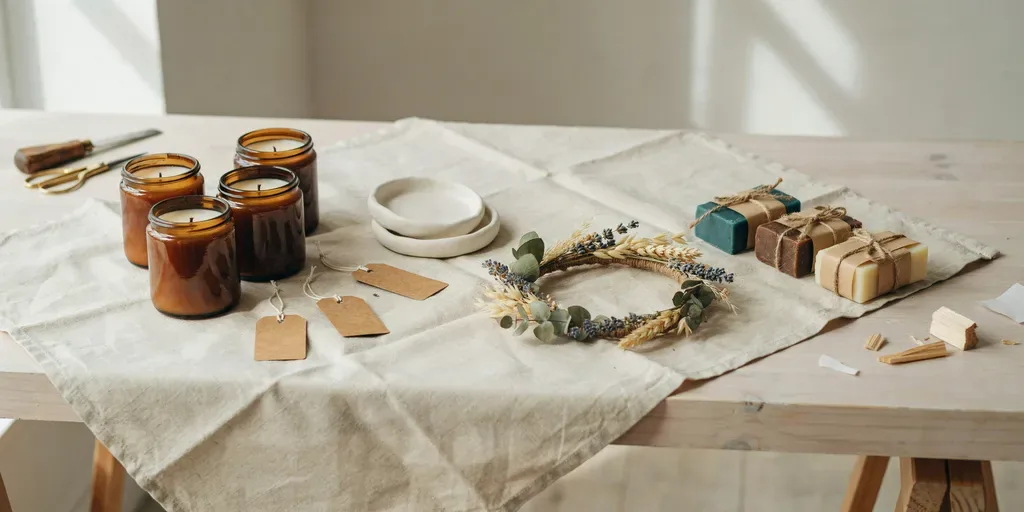
Candles are one of the most common market crafts because they’re useful, giftable and can be made in batches. Use one jar size and two or three scents, test every batch by burning one candle completely, and add a warning label with basic safety instructions.
Our guide to DIY candles covers wicks and temperatures. Check whether your market or insurance requires product liability coverage.
2. Clay trinket dishes

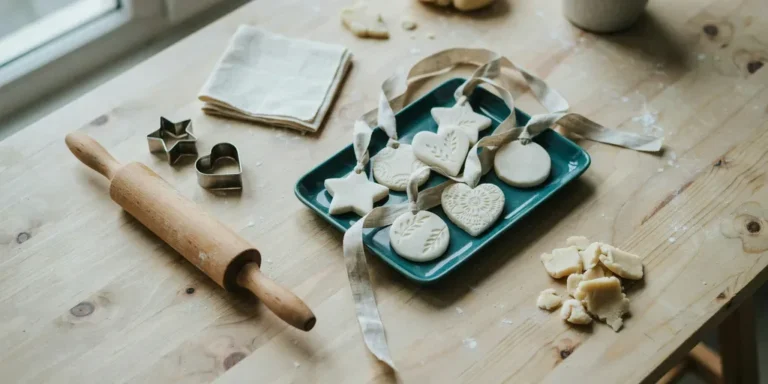
Small clay dishes for rings and keys are light, sell at an easy price and can be made in batches. Air dry clay needs to be sealed; tell buyers they’re decorative and not food-safe. See air dry clay crafts for technique.
3. Dried flower wreaths
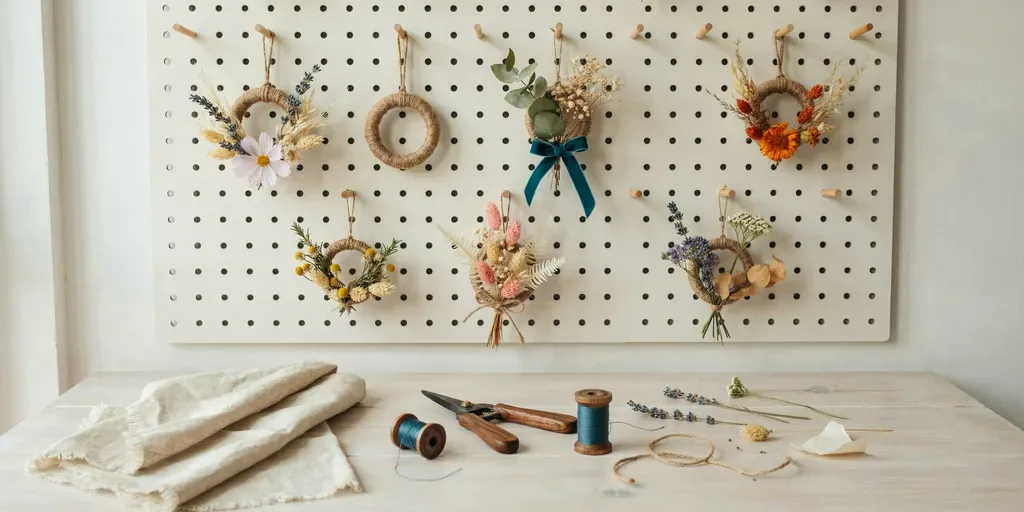
Small dried wreaths, 8 to 10 inches across, work as door or wall decorations and as gifts. Dried materials keep for months, so you can make them weeks in advance. A pegboard display shows them at eye level.
4. Melt-and-pour soap

Melt-and-pour soap uses a pre-made soap base, so there’s no lye to handle. Melt, add a skin-safe fragrance or essential oil within the supplier’s limits, pour into molds and wrap. Avoid making any skin or health claims on the label; in the US, a claim like “heals eczema” can turn soap into a regulated drug or cosmetic.
5. Wood slice coasters

Sanded birch slice coasters sealed with a food-safe finish sell well as sets of four. They’re quick to make in volume. Seal them properly so a wet glass doesn’t leave a ring.
6. Work out the price first

A simple pricing formula used by many makers:
- Materials per item, including packaging and labels.
- Labor: your time per item multiplied by an hourly rate you’d accept.
- Overhead: a share of table fees, card reader fees and supplies that break.
- Add those for the cost. Multiply by about 2 for a wholesale price and about 2 again for retail if you might ever sell to shops.
A worked example: a candle with $4 of materials and packaging, 10 minutes of work at $18 an hour ($3), and $1 of overhead costs $8. Twice that is $16 wholesale, and a retail price around $24 to $32. If the market won’t pay $24, look at cheaper materials or a faster process, not working for free.
7. Build the table display

A flat table is hard to see from the aisle. Use crates, small shelves or boxes under the cloth to put items at three heights. Group by product, show prices clearly on small cards, and keep the front edge of the table clear so people can pick things up.
Bring a card reader, change, bags and a sign with your name.
8. Packaging

At a holiday market, most purchases are gifts. Kraft boxes with tissue paper or a simple paper bag with a sticker make the handover feel finished. Wrap fragile items like candles well. Factor packaging into the price.
Your First Market: A Checklist
For a first holiday market, a short checklist covers most of what matters:
Weeks before
- Apply to one small local market, ideally indoors.
- Make a manageable amount of stock, for example 30 to 50 items across three or four products.
- Price everything and print small price cards.
- Set up a card reader and test it.
The day before
- Pack products in boxes by type, with packaging.
- Pack the display: tablecloth, risers, a small sign, price cards.
- Prepare change in small bills and a cash box.
On the day
- Arrive early, set up, take a photo of the table.
- Write down every sale: item and price.
After
- Count what sold and what didn’t. Next time, make more of what sold.
Track total costs, including the table fee, so you know whether the market was worth it.
What We Would Skip
Pricing only by materials. You’ll work for nothing.
Making twenty different products. Five products in depth sell better than twenty with one each.
Health or medical claims on soaps, candles or anything that touches skin.
Forgetting sales tax. Many states require a seller’s permit even for occasional markets.
Where We Would Start
Choose one or two products, make a small batch, price them with the formula above and try one small local market. For more ideas to make in batches, see easy DIY crafts and DIY Christmas gifts.
Questions We Get Asked
What crafts sell best at holiday markets?
Candles, small ornaments, clay dishes, dried wreaths, soap and other small, giftable items in the $10 to $30 range.
How do I price handmade crafts?
Add materials, your time at an hourly rate and overhead. Many makers double that for wholesale and double again for retail.
Do I need a license to sell crafts?
It depends on your state and city. Many require a seller’s permit to collect sales tax. Check with your state’s revenue department.
Is it worth selling crafts at markets?
It can be, if prices cover your time and fees. Track costs and sales from the first market.
What should I bring to a craft fair?
Products, a table cloth, risers, price cards, a card reader, change, bags or packaging, and a sign.
How much stock should I bring to my first craft fair?
For a small market, 30 to 50 items across three or four products is usually enough to fill a table without risking too much on unsold stock.