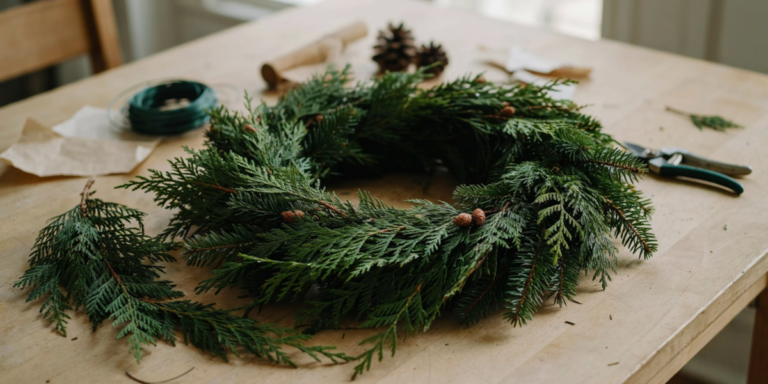
7 DIY Fall Wreath Ideas Built on One Grapevine Base
Most fall wreath tutorials start with a shopping list and end with a photo, and the part in between is where it goes wrong: the stems won’t stay put, the wreath looks lopsided, and something falls off the first time the door closes.
Every wreath below is built the same way, on the same base, with the same wire. Learn the method once and the seven designs are just different materials.
DIY Fall Wreath Basics: The Base, the Wire and the Order
The base. An 18-inch grapevine wreath. Grapevine is the most forgiving base there is, because stems can be tucked into the vines before they’re wired, and bare vine looks finished where you leave it uncovered. It’s also the base you can strip and reuse next year. Craft stores and online sellers usually price an 18-inch grapevine ring somewhere between about $8 and $15.
The wire. 22- or 24-gauge green floral wire on a paddle or spool, and a pair of wire cutters. Not scissors; wire ruins them.
The method. Make small bundles of three to five stems, cut to about six to eight inches. Lay the first bundle on the wreath, wrap the wire around the stems and the vine two or three times, and pull it tight. Lay the next bundle so its heads cover the stems of the first, and wire it. Keep going in one direction. Every wreath below is some version of that.
Glue is for faux materials only, and only as backup. Hot glue doesn’t hold dried stems through a season of a door opening and closing.
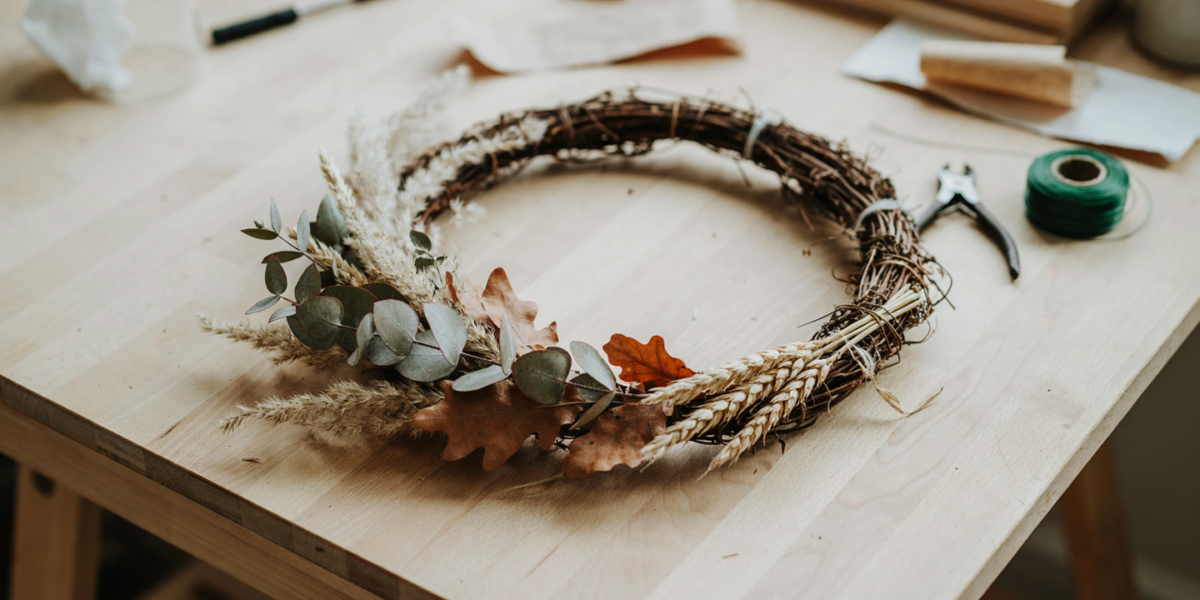
1. Wheat and eucalyptus crescent
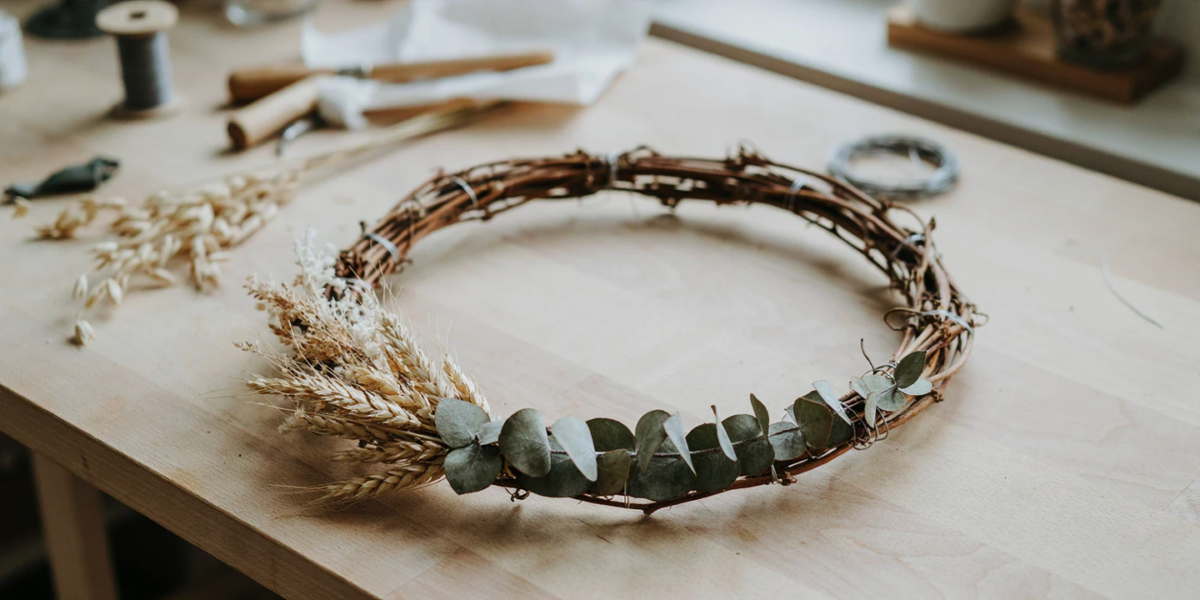
Cover only the lower third of the wreath, from about eight o’clock to four o’clock, with alternating bundles of dried wheat and preserved eucalyptus, working from both ends toward the middle. Finish the center where the two sides meet with a single larger bundle to hide the last stems.
Leaving most of the grapevine bare is what makes this one look deliberate rather than unfinished. Expect about 45 minutes.
2. Dried hydrangea
Hydrangeas dry well on the plant in late summer and early fall, when the petals start to feel papery. Cut the heads with a long stem, hang them upside down somewhere dry for two to three weeks, then wire them onto the wreath one head at a time, three to five heads around one side.
They’re fragile once dry. Wire them in by the stem, never by the head, and handle the wreath by the vine.

3. Faux maple leaves all the way round
The full wreath. Use faux maple leaves on stems, in two or three shades of rust, orange and deep red, and wire them in overlapping bundles around the whole ring, all facing the same direction. It takes more material than any other design here, so it’s also the most expensive, and it takes around an hour and a half.
This is the one that survives outdoors. Faux leaves don’t mind rain the way dried materials do.

4. Mini pumpkin cluster
Cover one side of the wreath with a base of dried grasses or eucalyptus, then add a cluster of three to five small faux pumpkins at about four o’clock. The pumpkins are the one place in this list where hot glue is useful: wire them in by their stems where you can, and add glue where the pumpkin touches the vine.
Use faux pumpkins, not real ones. Real mini pumpkins are heavy and eventually soften.

5. Cotton stems and dried grasses
Dried cotton stems and pampas or bunny-tail grass make a pale, soft wreath that suits a neutral front door better than the classic oranges. Wire cotton in groups of two or three bolls, and fill between them with the grasses.
Cotton sheds and grasses shed more. Spray the finished wreath lightly with unscented hairspray or a matte craft sealer outdoors, and keep it somewhere covered.

6. Ribbon wrap with a single bundle
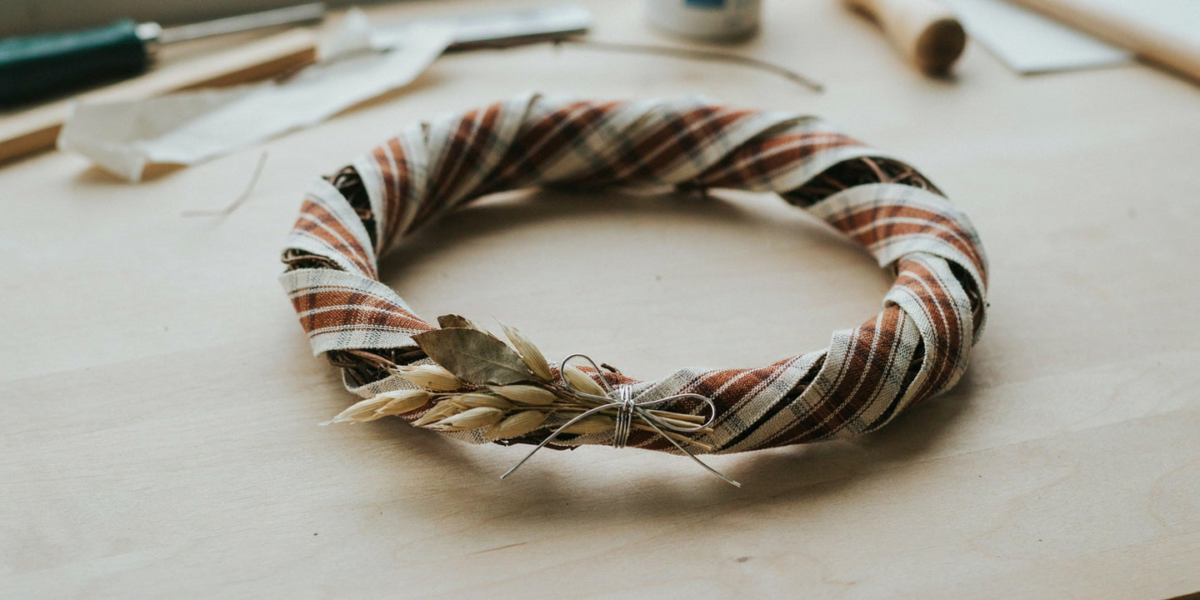
The fastest wreath here, at about twenty minutes. Wrap two yards of wide plaid or linen ribbon around the grapevine in a loose spiral, leaving vine showing between each turn, and pin the ends at the back. Then wire one generous bundle of wheat, eucalyptus or leaves at the bottom and finish it with a simple bow.
It uses the least material and still reads as a finished wreath from the street.
7. Hoop wreath with a spray of leaves
Not grapevine, but the same method. Take a 12- or 14-inch metal or wooden embroidery hoop and wire a spray of preserved or faux leaves and a few stems of wheat to one side of it, running about a third of the way around. It’s minimal, light, and the easiest wreath to hang indoors on a wall.

What We Would Skip
Foam wreath forms for a fall wreath. They’re made for pins and glue, and they show wherever the covering thins out. Grapevine is more forgiving.
Real gourds, fresh leaves or fresh berries. Fresh leaves curl within days and berries drop.
A glass storm door. Sun on the glass heats the space between the two doors well past what dried materials and faux leaves like, and wreaths hung there fade and warp quickly. If you have one, hang the wreath on the storm door’s outside, or indoors.
Where We Would Start
The ribbon wrap with a single bundle (6), because it takes twenty minutes and teaches the bundle-and-wire method with almost no material. Then the wheat and eucalyptus crescent (1), which uses the same method across a third of the wreath.
When the season is over, cut the wire and keep the base. The same grapevine ring becomes a DIY Christmas wreath in November. If this is your first project with wire and stems, our easy DIY crafts are a good warm-up.
Questions We Get Asked
What do I need to make a DIY fall wreath?
A grapevine wreath base (18 inches is a good size for a front door), 22- or 24-gauge floral wire, wire cutters, and your stems: dried wheat, eucalyptus, grasses, dried hydrangea or faux leaves. A glue gun is useful for faux pumpkins and berries.
How do you attach flowers to a grapevine wreath?
Tuck the stems into the vine first, then wrap floral wire around the stems and the vine two or three times and pull it tight. Overlap each new bundle so its heads cover the previous bundle’s stems.
How long does it take to make a fall wreath?
Anywhere from about twenty minutes for a ribbon wrap with one bundle to around an hour and a half for a full wreath of faux leaves. Most half-covered wreaths take about 45 minutes.
Can a dried fall wreath go outside?
Under a covered porch, yes. In direct rain, dried materials wilt and shed. Faux leaves and pumpkins handle weather much better. Avoid hanging any wreath between a door and a glass storm door, where heat builds up.
How do you store a fall wreath for next year?
Wrap it loosely in paper and keep it flat in a box somewhere dry and cool, away from the attic heat. Dried materials get more brittle each year; faux ones last several seasons.
What size wreath is best for a front door?
Most standard front doors suit an 18- to 22-inch wreath. Smaller wreaths look lost from the street; much larger ones crowd the door handle.