DIY Lamp Ideas: 6 Projects and How to Do Them Safely
Lamps change a room more than almost any other object, and good ones are expensive. A handmade lamp can cost a fraction of the price, and it can be made from something you already own: a jug, a vase, an old base with a tired shade.
Some of the projects below involve no wiring at all. The ones that do use pre-assembled lamp kits that are designed for beginners. Electricity deserves respect, though, so the safety notes are not optional.
DIY Lamp Projects, From No Wiring to Simple Wiring
The easiest lamp projects change only the shade or the cover: a paper lantern, a rattan shade, a recovered fabric shade. The next step up uses a plug-in kit to turn a jug or vase into a lamp. We’d leave anything that involves hardwiring into the wall to a licensed electrician.

1. A jug or vase turned into a lamp
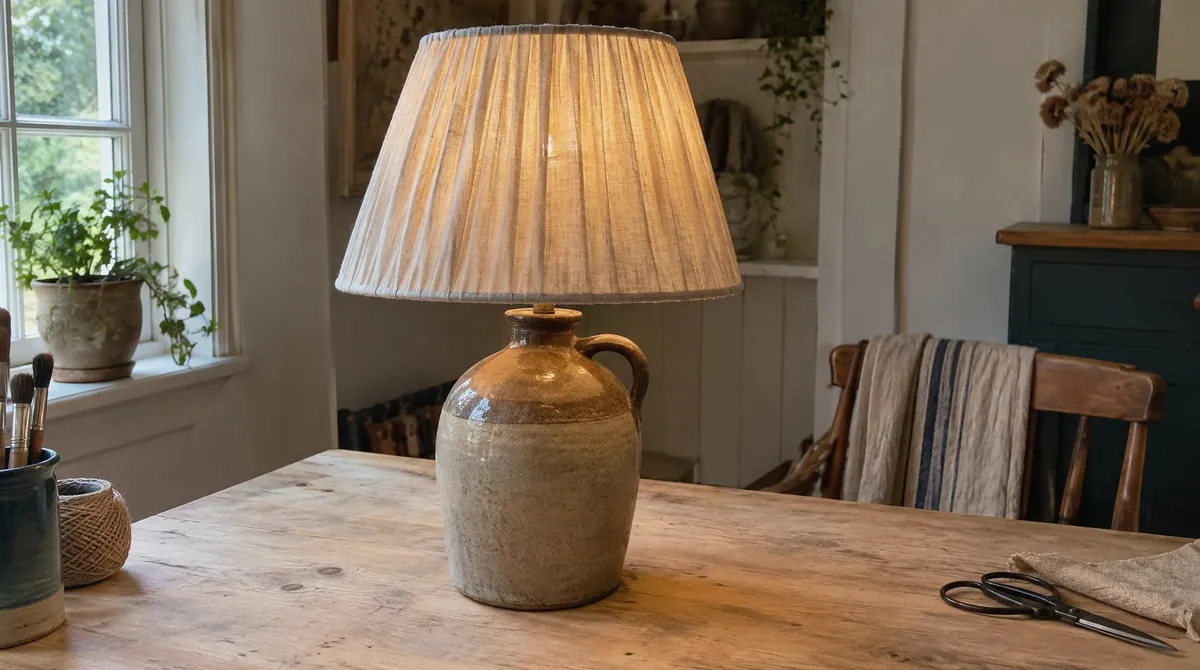
Time: 1 hour. Rough cost: $20 to $40 for a kit and shade.
Many lamp kits are made for bottles and vases and need no drilling: the cord runs out of the top through a special fitting, and the socket sits in the neck. Choose a heavy, stable jug or vase so it doesn’t tip.
Follow the kit’s instructions exactly, and choose a shade whose fitting matches the kit’s harp or socket.
2. Paper lantern with a new shade
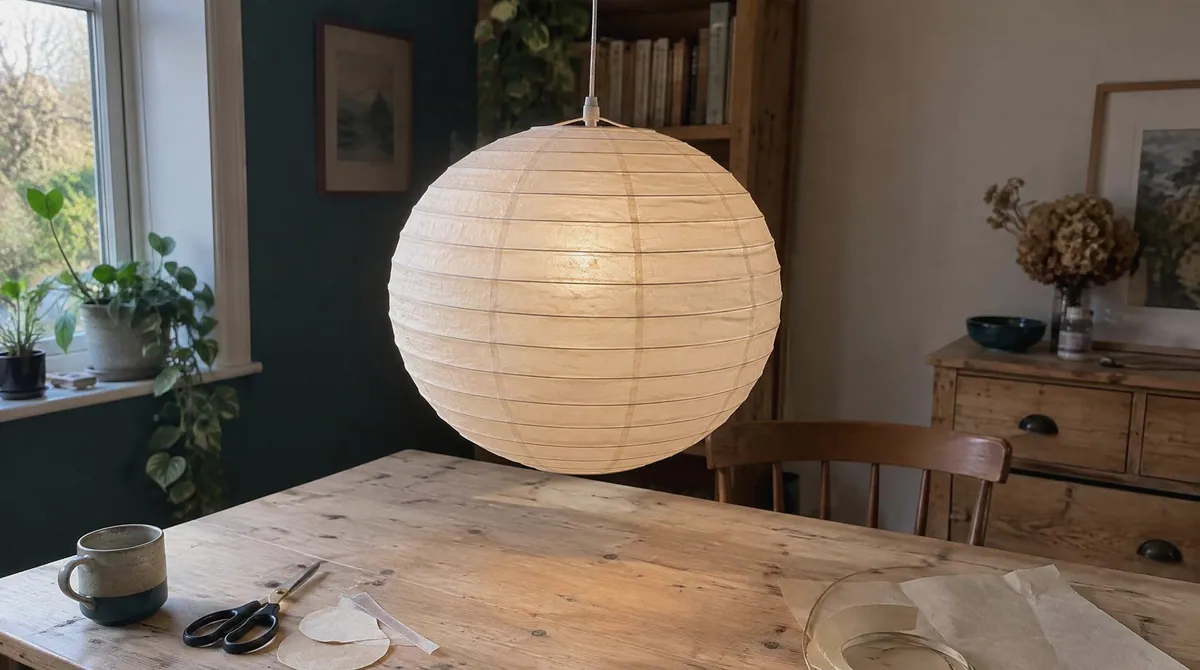
Time: 20 minutes. Rough cost: $15 to $30.
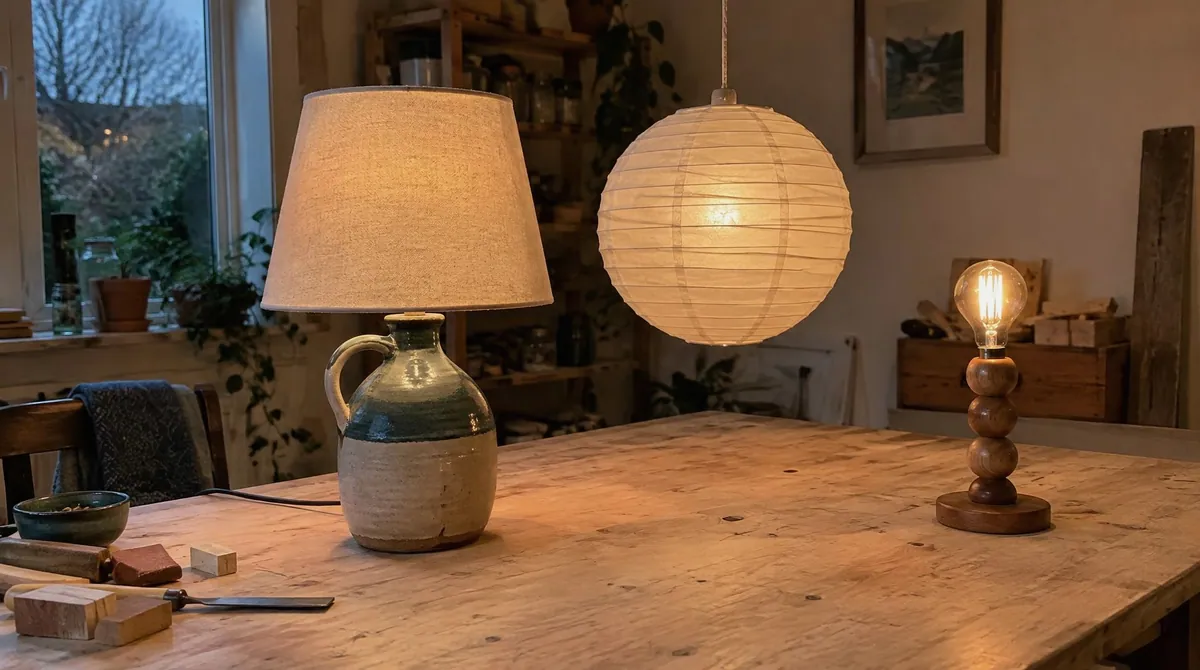
A large round paper lantern on a plug-in pendant cord is one of the cheapest ways to add soft light to a room. Hang it from a ceiling hook and run the cord along the ceiling and down the wall to an outlet, using cord clips.
Use only LED bulbs in paper shades; they stay cool. Keep the bulb from touching the paper.
3. Wooden bead chandelier
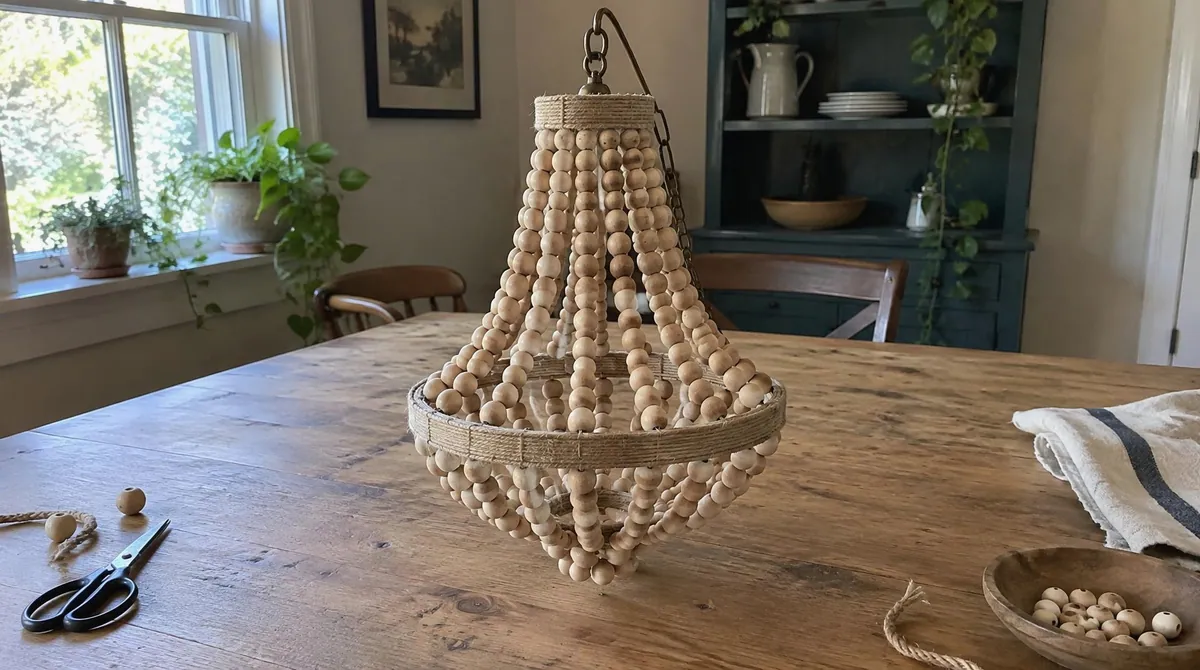
Time: 2 to 3 hours. Rough cost: $30 to $50 for beads and hoops.
Hang strands of raw wooden beads from two embroidery hoops, one smaller than the other, to make a tiered cover. Fit it over a plug-in pendant cord or an existing pendant. Keep the beads away from the bulb.
It casts soft, broken shadows and looks warm over a dining table.
4. Rattan shade update
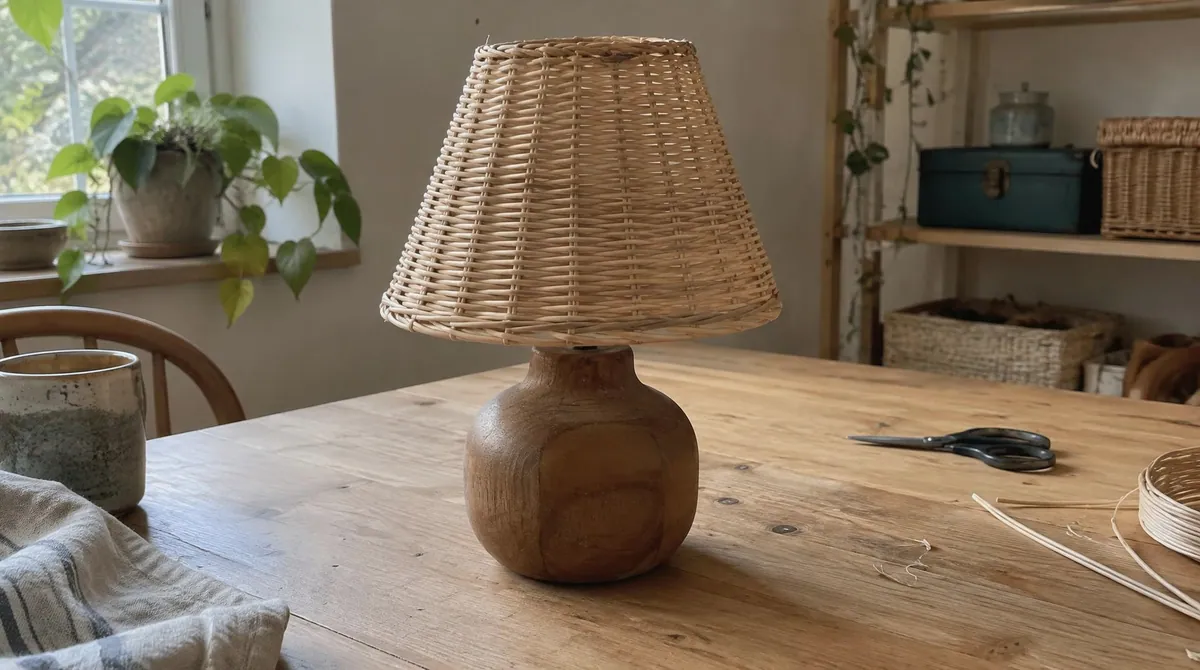
Time: 10 minutes. Rough cost: $20 to $40.
The fastest lamp update is a new shade. A woven rattan or cane shade on a plain ceramic or wooden base adds texture and throws patterned light on the walls.
Check that the shade fits the lamp’s harp or fitter and that it’s rated for the bulb you plan to use.
5. Plug-in wall sconce

Time: 30 minutes. Rough cost: $30 to $60.
Plug-in sconces mount to the wall with screws and plug into an outlet, so no wiring is needed. Cover the cord with a paintable cord channel, or wrap it in fabric or a wooden channel so it looks finished.
They’re useful beside a bed or a reading chair where there’s no room for a table lamp.
6. Recover an old shade
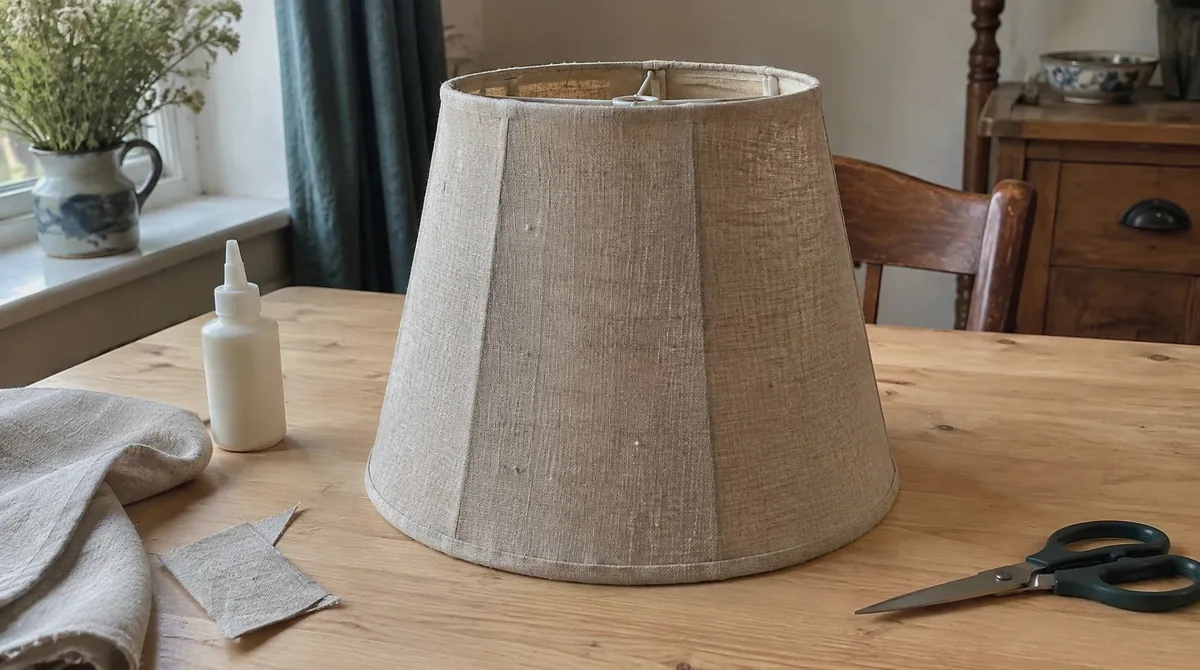
Time: 1 hour. Rough cost: $10 for fabric.
Wrap an old drum or tapered shade in linen or cotton. Use the old shade as a template to cut the fabric, leaving extra at the top and bottom, then glue it on with fabric glue and fold the edges inside.
Thin, light-colored fabrics let more light through. Keep the fabric away from the bulb and use an LED bulb.
7. Lamp kits and safety
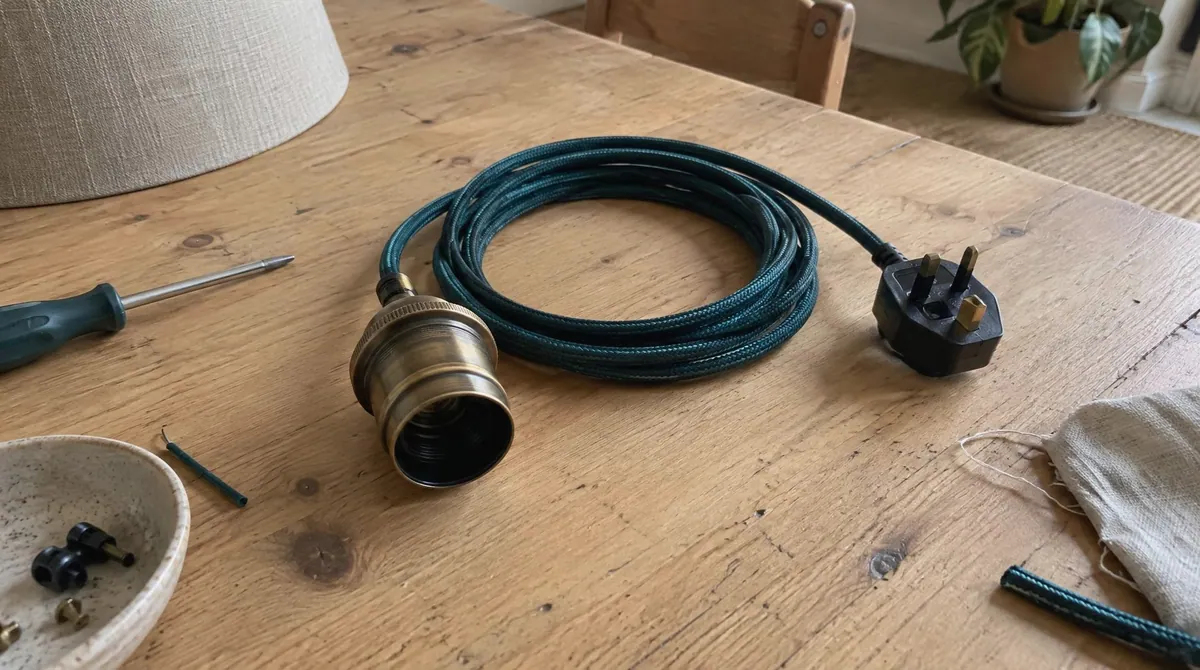
A few rules for any project with wiring:
- Use a complete lamp kit that’s been tested and listed by a recognized safety organization (look for a UL or ETL mark).
- Keep the lamp unplugged while you work on it.
- Follow the kit’s instructions exactly, including which wire goes to which terminal.
- Never exceed the maximum wattage marked on the socket or shade.
- If anything sparks, smells hot or flickers, unplug it and stop.
If you’re not comfortable with any of it, a lamp repair shop can wire a base for you at a low cost. Hardwired fixtures should always be installed by a licensed electrician.
8. Pick the right bulb
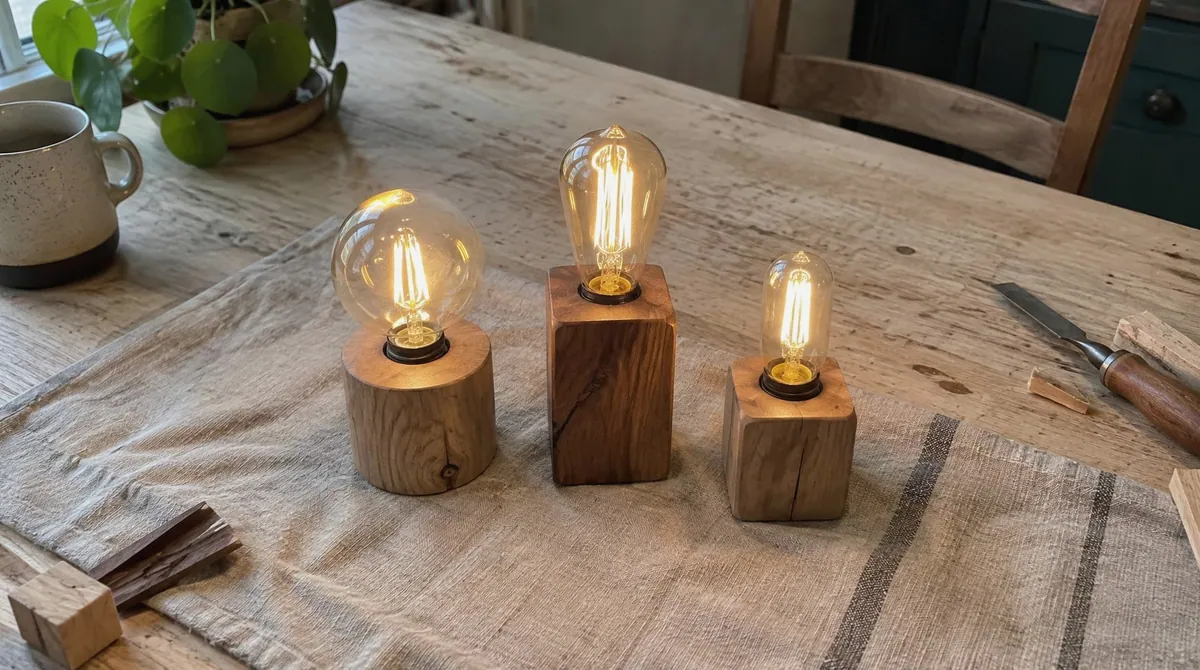
LED bulbs are the best choice for handmade lamps: they run cool, last long and use little power. Choose warm white around 2700K for living rooms and bedrooms.
Globe bulbs look nice in open shades and lanterns where the bulb shows. Dimmable LEDs need a dimmer that’s compatible with LEDs.
Which DIY Lamp to Start With
| Project | Wiring | Difficulty |
|---|---|---|
| Rattan shade update | None | Very easy |
| Recovered shade | None | Easy |
| Paper lantern | Plug-in cord | Easy |
| Plug-in sconce | None | Easy |
| Jug or vase lamp | Kit | Medium |
| Bead chandelier | Plug-in cord | Medium |
What We Would Skip
Old, frayed cords. Replace them rather than tape them.
Incandescent or halogen bulbs in paper, fabric or wooden shades. They get too hot.
Wiring anything into the wall yourself unless you’re qualified to do it.
Where We Would Start
A new rattan shade on a lamp you already have, or a paper lantern on a plug-in cord. Both take less than half an hour and need no wiring. For more ways to turn old things into something useful, see our upcycling ideas and our DIY home decor projects.
Questions We Get Asked
Can I make my own lamp?
Yes. The easiest way is a lamp kit designed for bottles or vases, which needs no drilling. Follow the instructions and use listed parts.
Is it safe to make a DIY lamp?
It can be, if you use a complete listed kit, keep it unplugged while working, follow the instructions and use LED bulbs. If you’re unsure, a lamp repair shop can wire it for you.
What bulb should I use in a paper lantern?
An LED bulb. It stays cool and won’t scorch the paper.
Can I turn a vase into a lamp without drilling?
Yes. Bottle and vase lamp kits run the cord out of the top, so no hole is needed.
How do I hide the cord on a plug-in sconce?
Use a cord cover or channel that can be painted the wall color, or a wooden or fabric cover for a more decorative look.
What color temperature is best for a cozy lamp?
Warm white, around 2700K. It looks soft and warm in the evening.