9 Upcycling Ideas for Clothes You Were About to Throw Out
Most clothes that get thrown out aren’t worn out. They have a hole in one place, a stain in another, or they simply stopped fitting. Upcycling is the step between the closet and the donation bag, and a lot of it takes less sewing than people expect.
The nine ideas below are sorted by how much sewing they need, from none at all to straight seams on a machine or by hand. Each says which fabrics it suits, because the fabric decides more than the pattern does.
Upcycling Ideas for Clothes, Sorted by How Much Sewing They Need
A few facts that save projects:
- Knits don’t fray; wovens do. T-shirt jersey can be cut and left raw. Cotton shirting, denim and linen unravel at cut edges unless they’re hemmed, zigzagged or deliberately left to fray.
- Only natural fibers dye well with ordinary dye. Cotton, linen and rayon take all-purpose and fiber-reactive dyes. Polyester needs a dye made specifically for synthetics.
- Wool felts in hot water, and acrylic doesn’t. Check the label before you try to shrink a sweater on purpose.
1. No-sew T-shirt tote bag
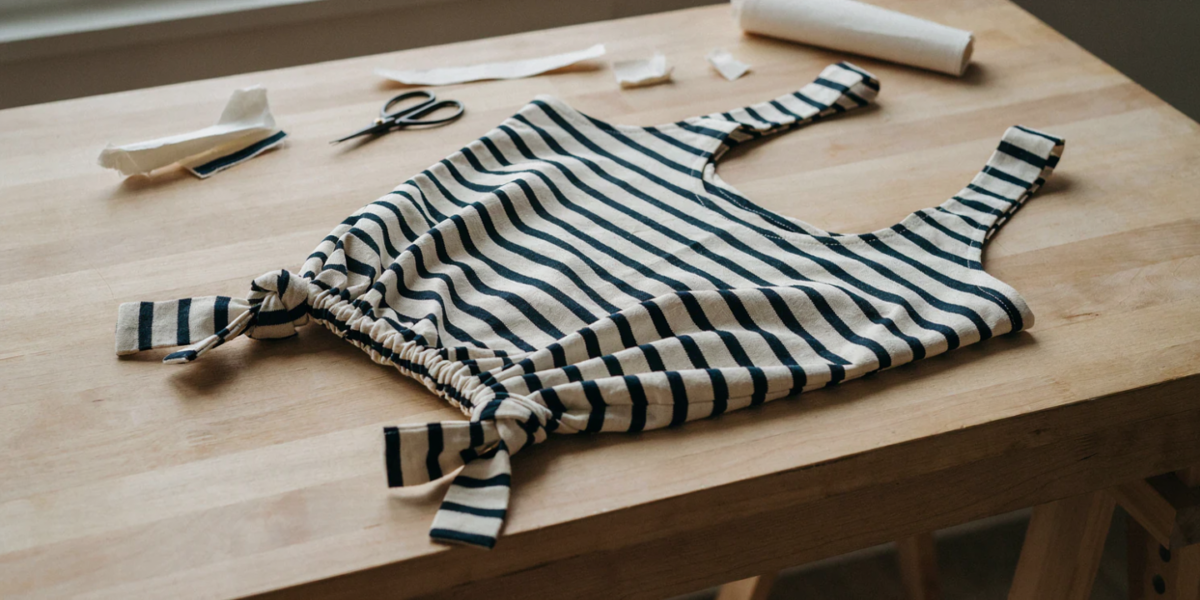
Cut off the sleeves and widen the neckline to make handles. Turn the shirt inside out, cut a fringe about three inches deep along the bottom hem, and tie the front and back strips together in pairs. Turn it right side out.
Twenty minutes, no sewing, and T-shirt jersey won’t fray. A thicker shirt makes a sturdier bag.
2. Jeans into cutoff shorts
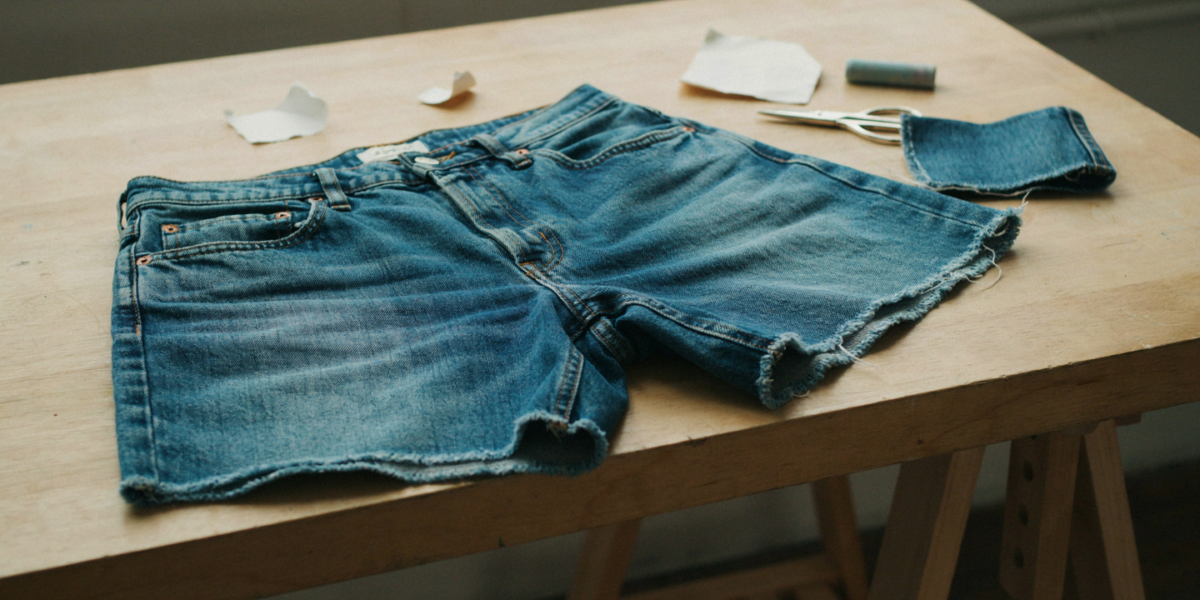
Put the jeans on and mark the length you want, then add an inch before cutting. Cut straight across, a little longer at the back than the front, and put them through the wash. The hem frays into a soft edge after a few washes.
Cut long. You can always take more off, and denim shortens as it frays.
3. Tie-dye or solid dye to rescue a faded piece
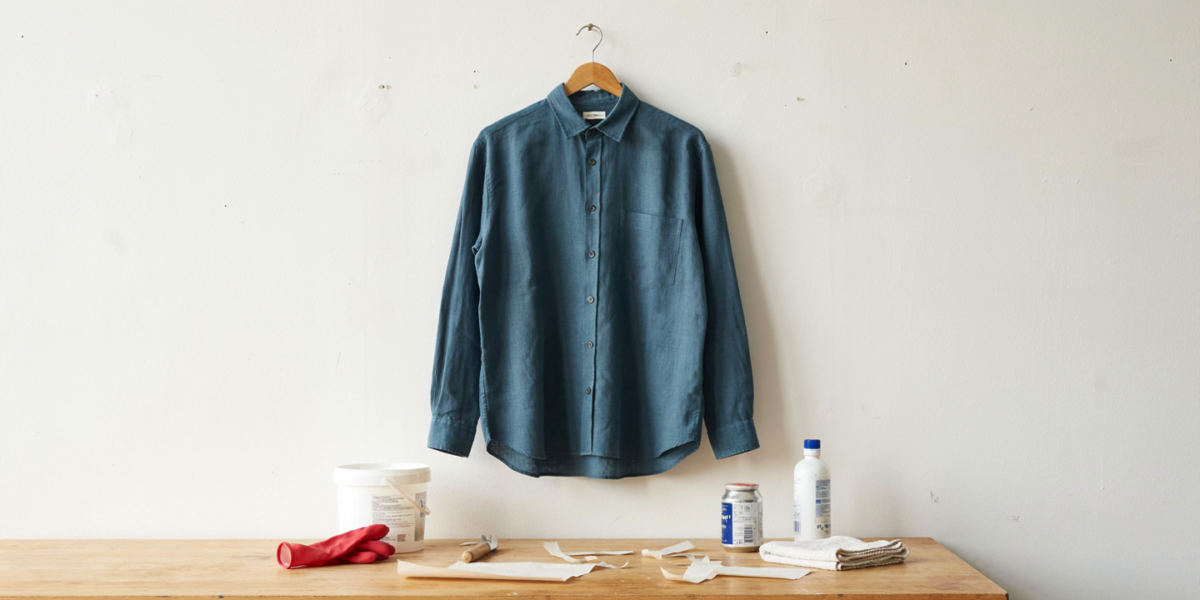
A faded black cotton T-shirt or a stained white linen shirt comes back with one dye bath. Wash the garment first, follow the dye’s instructions for water temperature and salt or soda ash, and dye in a bucket or the sink with gloves on.
It only works on natural fibers. A cotton-polyester blend dyes to a lighter, heathered shade, because only the cotton takes the color.
4. Visible mending on jeans
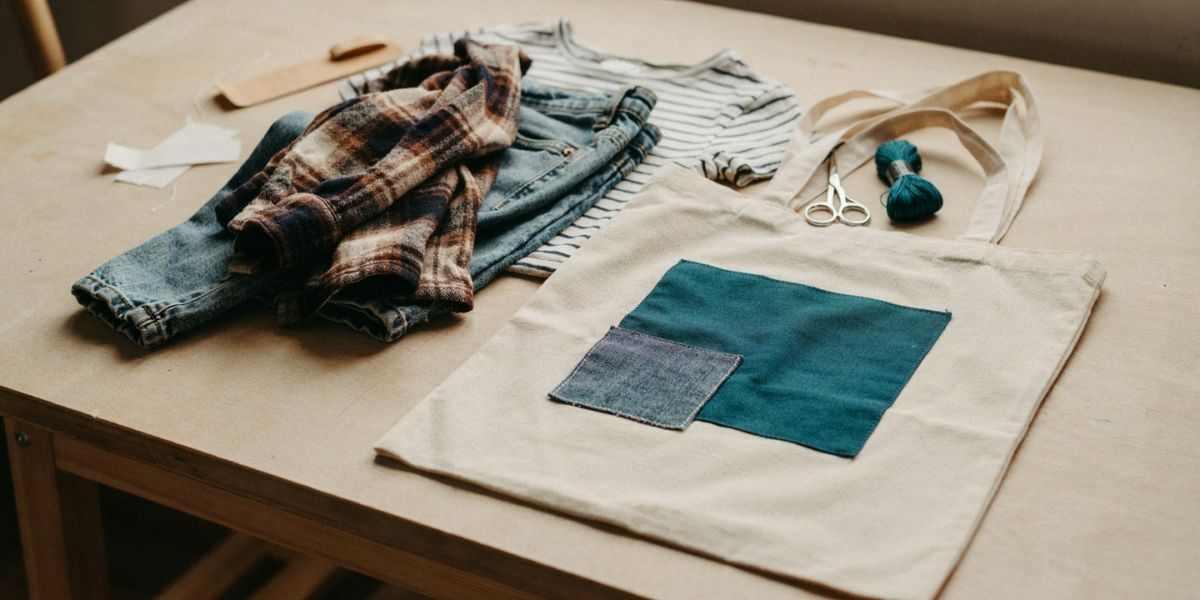
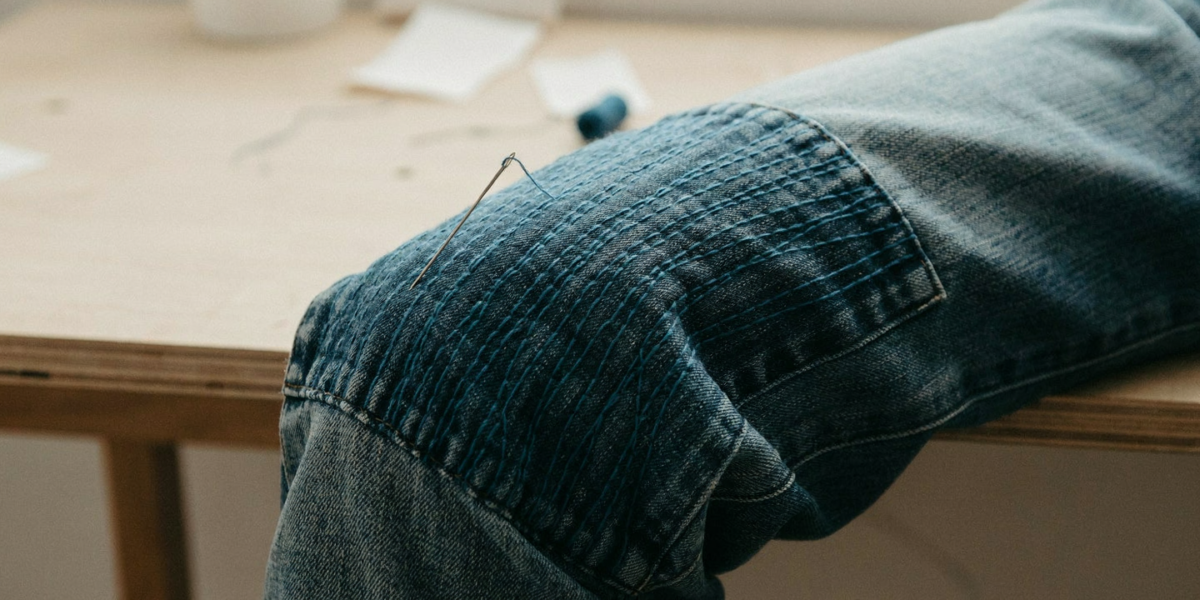
Instead of hiding a hole, patch it and show the stitches. Pin a piece of sturdy fabric behind the hole, then stitch rows of simple running stitches through both layers with thick embroidery or sashiko thread, running past the edges of the hole in every direction.
This is the upcycle that changes a garment the least and adds years to it. A knee takes an evening by hand.
5. Felted wool sweater into coasters or mittens
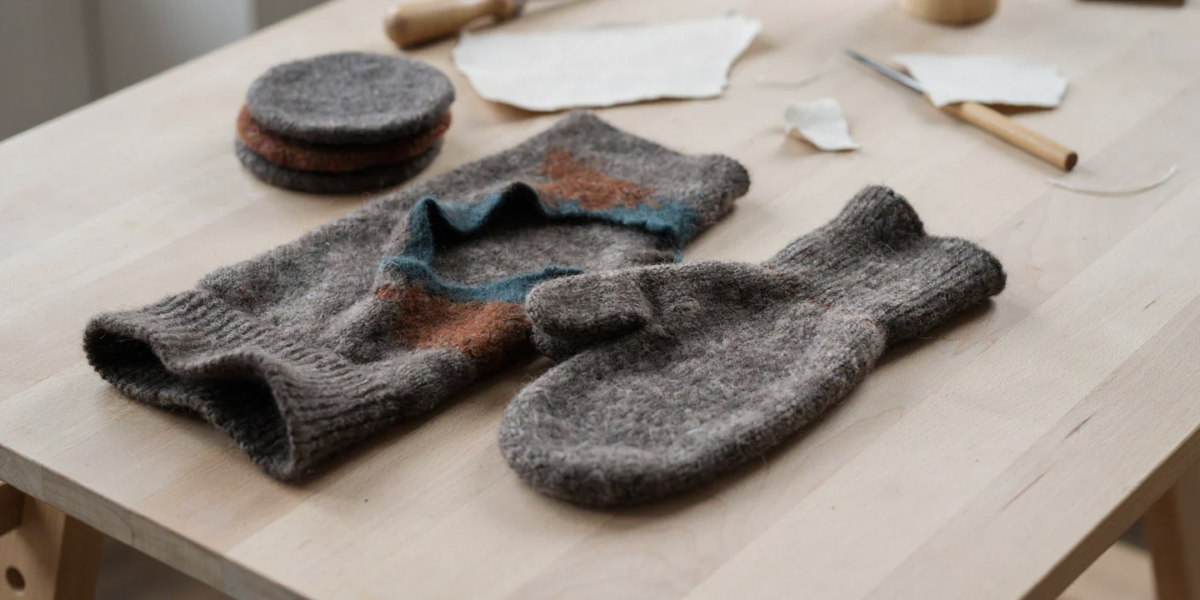
A 100 percent wool sweater washed on hot and dried in a dryer shrinks and felts into a dense fabric that doesn’t fray. Cut it into coasters with no hemming at all, or trace your hand and sew mittens with a simple seam.
It has to be wool, and not labeled machine-washable or superwash, which is treated specifically so it won’t felt.
6. Button-down shirt into an apron
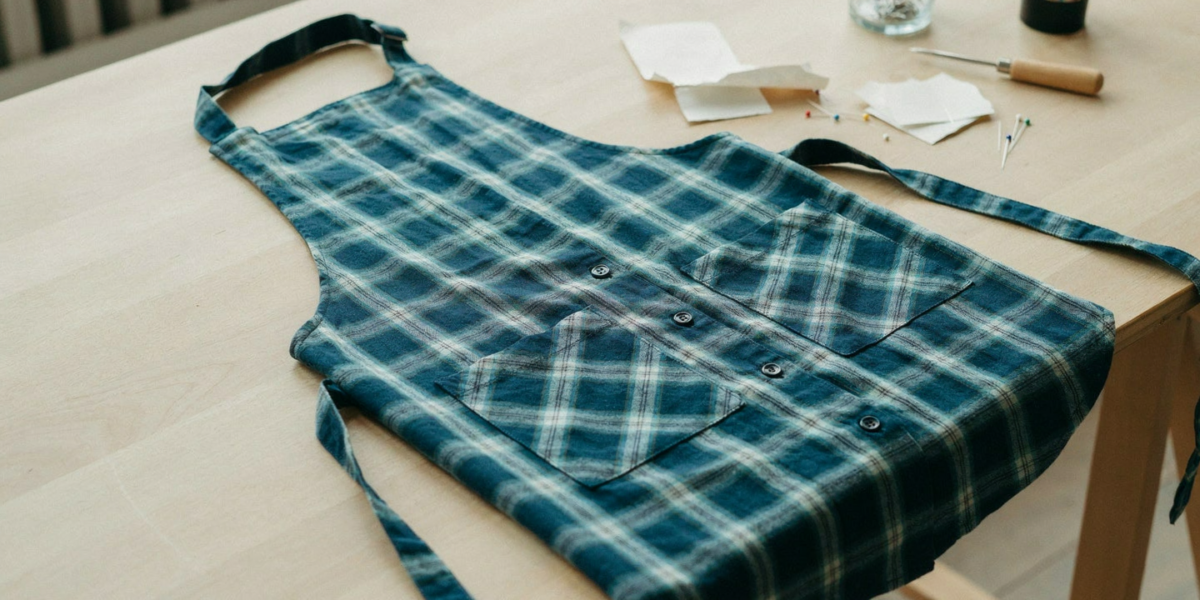
Cut the back panel out of a large men’s shirt, hem the side edges, and fold and stitch a channel along the top for a tie. Use the sleeves for ties or a pocket. The shirt’s existing hem stays as the apron’s hem.
Straight seams only, which makes it a good first project for a sewing machine.
7. Flannel shirt into a pillow cover
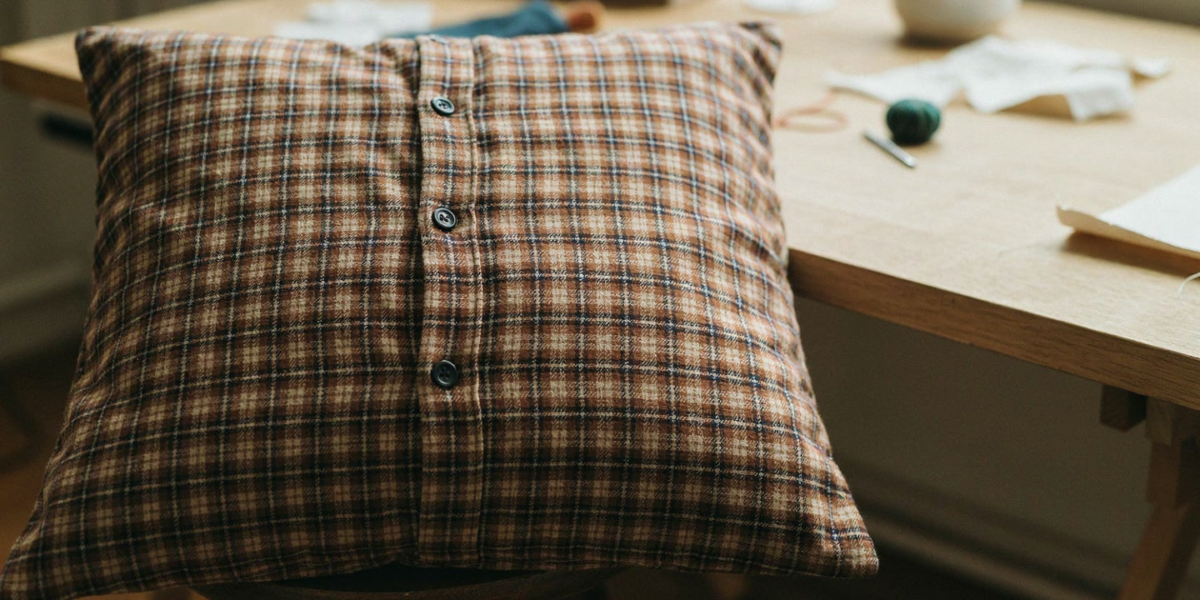
An envelope pillow cover is three straight seams. Cut a front panel the size of the pillow insert plus half an inch on each side, and two back panels that overlap by about four inches. Hem the overlapping edges, sew right sides together, and turn it out.
A shirt’s buttons can also be the closure: cut the front with the button placket in the middle of the back panel.
8. T-shirt yarn
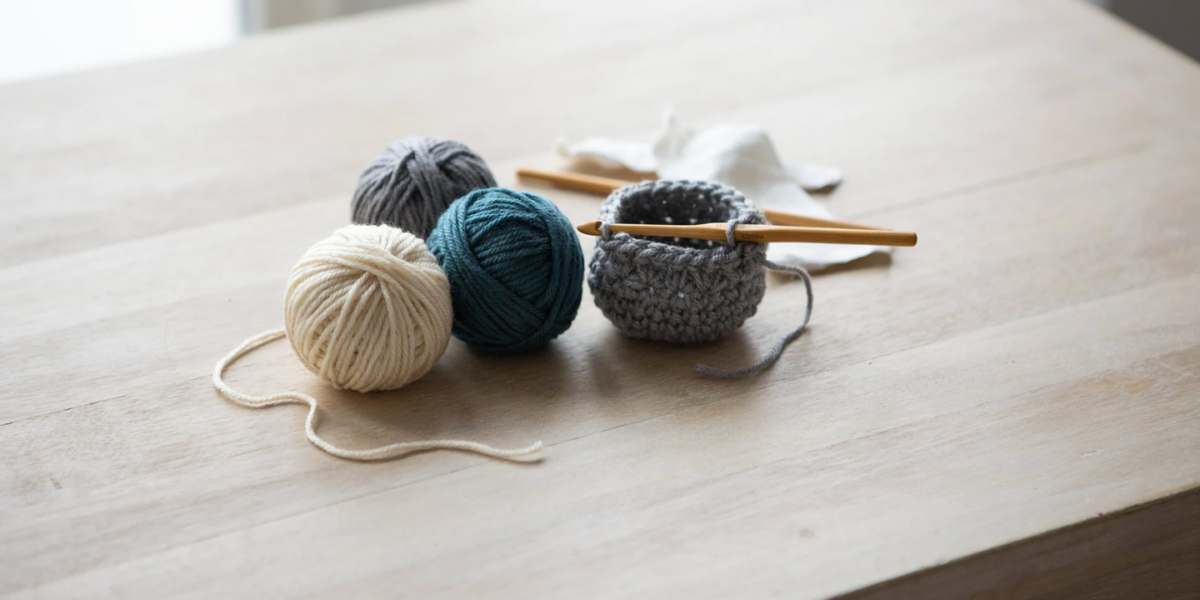
Cut a T-shirt into one long continuous strip, about an inch wide, by cutting across the body in a spiral. Pull the strip, and the jersey curls into a soft round yarn. Use it to crochet a basket, braid a small rug, or wrap a jar.
One adult T-shirt makes a surprising amount of yarn. A small rug takes several.
9. New buttons and a proper hem
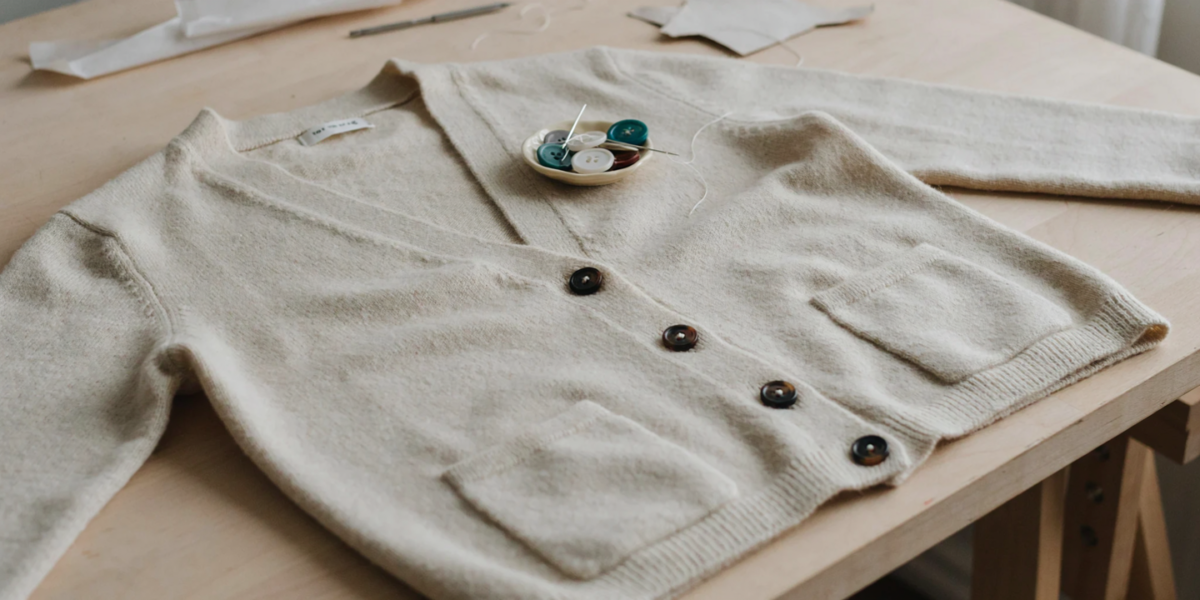
The least glamorous upcycle, and the one that most often turns an unworn garment into a favorite. Cheap plastic buttons swapped for horn, wood or metal ones change how a jacket or cardigan looks. Trousers hemmed to the right length for your shoes change how they’re worn.
Both are hand-sewing projects of under an hour.
What We Would Skip
Cutting up something good just because it’s trendy to upcycle. Clothes that still fit and have life left in them are better worn or donated.
Dyeing polyester with all-purpose dye. It barely takes the color.
Complicated refashions as a first project, like turning a dress into a jumpsuit. Straight seams first, fitting later.
Where We Would Start
The no-sew T-shirt tote (1) or the cutoffs (2) this week, because neither needs a needle. Then visible mending (4) on the next pair of jeans that gets a hole, which teaches the one hand stitch that matters.
For bigger projects around the house, see our upcycling ideas for furniture and jars, and our easy DIY crafts for first projects.
Questions We Get Asked
What can I make out of old clothes?
Tote bags, cutoff shorts, pillow covers, aprons, felted coasters, T-shirt yarn for baskets and rugs, and patched or dyed versions of the original garment.
What are easy no-sew upcycling ideas for clothes?
A T-shirt tote bag with a knotted bottom, jeans cut into shorts, T-shirt yarn, and dyeing a faded cotton garment. None of them need sewing.
Can I dye polyester clothes?
Not with ordinary all-purpose or fiber-reactive dye. Polyester needs a dye made for synthetics, and even then the result is usually lighter than natural fibers.
How do I stop fabric from fraying without sewing?
Use knits, which don’t fray, or felted wool. For woven fabrics, fabric glue or a fray-stopping liquid on the cut edge helps, or leave denim to fray on purpose.
What is visible mending?
Repairing a hole or tear with stitches and patches that are meant to be seen, often with contrasting thread in rows of running stitches. It’s a repair and a decoration at the same time.
Do I need a sewing machine to upcycle clothes?
No. Many projects are no-sew or hand-sewn. A machine makes straight seams faster on projects like pillow covers and aprons, but it isn’t required.
Where do I find clothes to upcycle?
Your own closet first, then thrift stores, where flannel shirts, wool sweaters and denim are easy to find. For felting, look for sweaters labeled 100 percent wool and not superwash; for dyeing, look for 100 percent cotton or linen. The label matters more than the color, since the color can be changed.